Episode Transcript
[00:00:02] Speaker A: Welcome to the podcast about Lighting Matters. Our unflinching conversations uncover the nuances and complexities which shape the craft of lighting design.
[00:00:11] Speaker B: We explore the pivotal whys behind a lighting designer's choices and find honest answers to your most challenging lighting questions. Because lighting Matters.
Welcome to the Lighting Matters podcast.
I'm so excited to be talking with you today and with my co host. My name is Lisa Reed with Reed
[00:00:35] Speaker A: Burkett Lighting Design and Avi Moore with more lights. And so excited to have our largest Lighting Matters publicist.
I don't know how best to describe Dawn Brown. Thank you for joining the Lighting Matters podcast. I noted the shirt to Loving the shirt.
Welcome to the podcast.
[00:00:59] Speaker B: The shirt says Lighting Matters. I mean, that says it all.
[00:01:02] Speaker A: Yeah, Lisa, we're behind the times. We need shirts and hats. We need more swag.
[00:01:08] Speaker B: Are you selling those, Don?
[00:01:11] Speaker C: No, actually I made this one and it's kind of a pain because every time I wash it, I have to re iron it because all the letters keep coming off.
But.
[00:01:21] Speaker B: But Lighting Matters.
[00:01:23] Speaker C: I actually had the idea because I was like, hey, why don't I go to like, ids or it was the interior design show in Toronto and I'm thinking I should just go there with Lighting Matters stuff on because a lot of these interior designers are thinking that they already do design lighting for themselves and it's really difficult to, you know, work with some of them or to kind of get them talking about lighting and, and stuff outside of the aesthetic world. And so, yeah, I just wanted to kind of draw attention to myself and draw attention, maybe spark some conversations about how we could be looking at lighting differently, to benefit people in a different way than just aesthetics. Not that aesthetics aren't important. I mean, it's in my business name.
So. Yeah.
[00:02:19] Speaker B: Yes.
So let's back up and tell our listeners who you are and how you got into lighting, all that stuff.
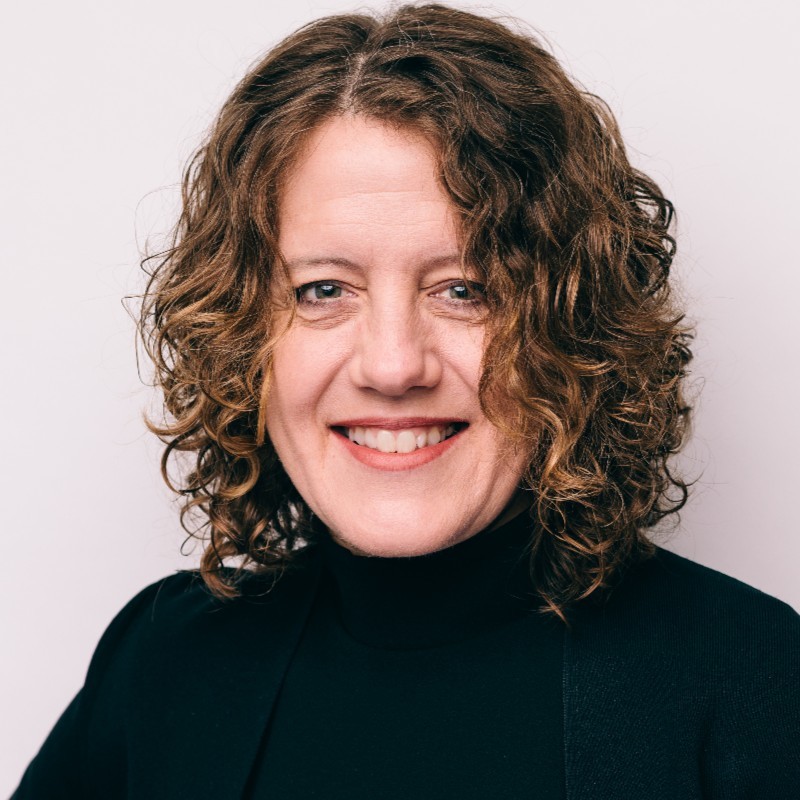
[00:02:28] Speaker C: Yeah. So I am Dawn Brown and I am the principal of Ontario Aesthetic Lighting Design, Oald.
I've been practicing independently for. This is my third year. I'm in my third year now. Prior to that, I was with exp, which is a large multidisciplinary engineering firm, led, primarily the lighting group is led out of the United States, but. And so I was with them for about 20 years, but just prior to going out on my own, I was with another firm called Walter Fady and they're probably like maybe half, not even half, maybe the size of exp, but same sort of deal. Multidisciplinary engineering firm. They had architecture and all of that too. So how I got into lighting, I actually have a diploma in architectural technology which is very similar to architectural engineering in the states.
So architectural technology is a college program. It's a three year program that I took. So it's a diploma program, it's not a degree. After college I went to work for this little engineering firm that did a lot of work for the college and I applied in the structural department but they weren't hiring so they passed my resume over to electrical and thank goodness.
Yeah, but I needed a job so I was like open to working and experiencing whatever. I actually took like night school classes to try and understand electrical stuff a little bit better. And, and I get it, like I understand how circuits work and how the wiring goes and everything, but I don't really understand like they were having me do these control system logic diagrams and stuff and wiring diagrams. Like even to this day I look at a wiring diagram and I'm like, I don't know, I could kind of follow it, but I wouldn't.
I could attempt to make one myself and I might get okay, but like it's just a block in my mental capacity that I just don't grasp it. So when I interviewed for them, I actually brought paintings that I had did because I wanted to make sure that they understood that I am an artist and that this is not my like first choice of career things doing electrical stuff and that I really am creative person.
So they actually introduced me to the IES ED100 course. And so I took that course.
The person who was teaching that course was also the program director at the time it was called Ryerson. They changed the name to Toronto Metropolitan University and that is a night school certificate program. Took that awesome. It was amazing, like great. And then took my lc and a few years after having my lc, that's when the little company that I was got hired with got bought out by the big company called TRO Global and they rebranded to exp.
And I shortly after that met Aram Evan. We had a conversation. I was actually about to get laid off.
And circumstances were that, you know, we weren't pulling in a whole lot of work at the time. Hamilton Wise and in Ontario. So he was working on this massive theme park in Doha, Qatar and he pulled me in and pretty much saved me from being laid off. And it was amazing. Like they, they have such great people to work with and prior to that I never worked in any like theatrical type things. And they do a lot of theme parks and immersive experience stuff and hospitality and so it was a whole new world for me. And it was almost very intimidating because I was like, wow, I don't do any of this stuff. This is like, yeah, but what is DMX and what is all this? And so I learned a ton working for them. I was with them for about eight years before I left. So yeah, that's how I got into lighting.
[00:06:37] Speaker B: That had to feed the artist. Artist side of you though. I mean, that's so perfect.
[00:06:43] Speaker C: I'm like, we had this rule the. When I was with the smaller division Hamilton guys, they had this rule that you had to ask if you. Or you had to flag it if you needed to work overtime. And so I remember the first time messaging Erim saying, hey, do you mind if I work overtime on this? And he's like, what?
Like why is this? But it was just a way for them that when it was a smaller firm, it was. They didn't have like a whole bunch of people doing the accounting and all that. It was, you know, limited number of people so it was easier for them to manage if they, if employees could give them a head up, Heads up and stuff. So he just laughed and thought that was just hilarious.
Yeah, yeah.
[00:07:30] Speaker A: In that world it's like overtime. Well, yeah, of course the deadline is tomorrow and we just got backgrounds yesterday, so.
[00:07:39] Speaker C: Yeah, yeah, yeah. So they work. Their process of working in their relationships with their clients are. We're a little bit different than what I was used to. I remember it wasn't the theme park one but the one of the other projects that I worked on. We kept getting like site plans. Like we would go, they would make the deadline for the site plan approval a certain date and then the day before or the morning of site submission, they would give us a fresh background. And I'm like, this is crazy.
And we have to keep changing it and stuff. It's so like, oh man. I think that was a huge eye opener to just having to change your whole process and everything to be able to accommodate those quick changes and stuff. Just the way you set up your grids for calculations and everything. Because I was like very detailed, doing all these little line grids and stuff along the walkways and whatever. And that went out the window because you can't maintain that details and stuff when people are trained changing so quickly. So it was a real good experience. It gave me a, a perspective of how other people kind of did our same thing. I wish I had have done more though. I wish I had have gone out and worked for other companies and stuff. Maybe not spent 20 years with one company, so.
[00:09:05] Speaker B: Well, okay, so now you are out doing your own thing. And kind of back to what you mentioned at the outset, that you decided to go to this interior design show and tell everybody, lighting matters. Lighting matters.
[00:09:19] Speaker C: How did it go? It went pretty well. I mean, you know, not as many people cared as much as what I thought they were going to.
Yeah, but that makes me so sad.
[00:09:31] Speaker B: Yeah, well, they don't know that they.
Okay, they don't. I said they don't know that they should care. They don't know how much it impacts.
[00:09:40] Speaker C: Right. When we. We would have the conversations and when we were engaged in the conversations, people were interested. But then, for example, I was asking if they would mind, you know, submitting a little recording of why lighting matters to them. Oh, yeah, I'll do that for sure. No problem. And then I. And then it just kind of like got, you know, fell by the wayside. I'm sure people just got busy and stuff, too. But for me, if it's something that I'm really passionate about, then I make the time to do it. And there were people that really. They did make the time to. To kind of give me something, but the majority of the people that I talked to, it was not. It wasn't something that came back to me right away, so. At all, actually.
[00:10:25] Speaker A: So, Don, what do you think the barrier to entry is? Yeah, what do you think they're like?
[00:10:30] Speaker C: I think it's fear, to be honest, in that crowd, in the interior design crowd. I think it's a misunderstanding of what we do. I think that they think that we do what they do and we don't. And then they don't really understand.
Some do, but not all understand what architectural lighting actually is, because for them, they are creating a space that's visual. And when they're looking at lights or what they think about lights and lighting, they're thinking about the physical form of the light and the size and the character and how it fits into their overall visual scheme of things. And they're. They're used to. In everybody. I think architects and interior designers are used to, like, having a tangible thing that they can mold and apply to surfaces and stuff like that. Whereas light is this thing that's invisible and it just happens. And so they feel that lighting design is picking a fixture, and we're going to come in and we're going to pick something that's not going to match with what they're doing or whatever. But really what we're trying to do is create an atmosphere. And we're looking at optics. And how do we get the light to, like, cascade over a surface in a different way and pick up textures where textures need to be picked up? And you guys know all of the whole thing, but they're not thinking that. And so to engage with the lighting designer, unless they know is somewhat like, why would I want to do that? You're my competition.
[00:12:08] Speaker B: Well, right. I like doing the lighting, so they think that we do what they do. And I know I stepped on you, Avi, so I want to come back to you. But they think that we do what they do, or they think that we have this one skill that they don't have that other reps have. Just doing the photometrics.
[00:12:25] Speaker C: Oh, yeah. I always try to make sure that I get that conversation in whenever I'm talking to an interior designer, too. It's like, oh, well, you do all your lighting, so do you do your own photometrics too? And they're like, oh, well, no, our. We usually get a rep to do that. And I'm like, oh, okay. Well, did you know that they're not doing it for free and that they're actually adding their cost of their service onto the cost of the products? And they're like, no. They're all stunned. Like, they don't know this, that you're not paying for it, but your client is paying for it.
[00:12:59] Speaker A: Yeah. And I don't know. I think Lisa and I have talked about this and Donna, I would assume you're similar is that how many foot candles is almost the second, third, fourth, fifth, or sixth? Question.
[00:13:13] Speaker B: Yeah.
[00:13:14] Speaker A: Versus look, feel, intensity, mood, accent.
You used a better word previously.
[00:13:23] Speaker C: Atmospheric.
[00:13:23] Speaker A: What you're highlighting.
[00:13:25] Speaker B: Oh, yeah.
[00:13:26] Speaker A: Is question number one.
Foot candles.
[00:13:30] Speaker C: What are we doing? What is the thing that we want to achieve here? Are we lighting product? Are we trying to create an atmosphere, create memories?
That's number one.
[00:13:40] Speaker A: And foot candles, I can adjust that with a dimmer. Well, we don't use dimmer. I can adjust that with Dolly. I can adjust it with dmx.
I can change the color temperature with the technology.
That's all the tech. But we haven't started the conversation with look and feel. And yeah, that's what you're doing. You pick this beautiful chandelier with GU9 bulbs. Please don't use GU9 bulbs. But they do all the time. So great. You're going to have this beautiful chandelier with flickering bulbs. And then, you know, what else are you doing in the space? Eating dinner that you nine decorative looking thing. That's flickering. Is it going to help you see your friends and your dining room table or in your restaurant or whatever it may be?
[00:14:29] Speaker C: Right. And you know, once you get into a certain caliber of service or design, I think that people putting together those like higher end spaces, they understand that they need a lighting designer. But it's the normal everyday like an office space or a hospital or a long term care facility or even outdoor parking lots, parking garages, streetscapes, stuff like that. People think like, they don't think about the fact that they're creating this experience and that our whole lives are basically one experience after another. And they just think, well, how much do, how much light do I need, how many fixtures in order to meet code? And so that's really like the difference between engineering and design. Right. So engineering is, you know, start with the metrics. And I have this thing where I like to describe the difference between engineering and design is that engineering focuses is, caters to the conscious mind, whereas design seeks to influence the subconscious mind. And so if you are. Yes, love that, love that, yeah. So if you are focused on satisfying the conscious mind, you're thinking about how much light do we need to physically see and all the physical metrics that you need in order to accomplish what you're trying to do. But if you're striving to influence how somebody navigates through a space or perceives a level of service or something like that, you're thinking in a totally different way. And so that's where I feel like as a lighting designer, that's what lighting designers are. We are that bridge between the people who think about the metrics and the codes and all of the safety stuff and the people who think about the art, I guess, of the space.
And so we marry those two things together. And so I think that's what if you were to ask me what is a lighting designer? We're a bridge profession between engineering and architecture.
[00:16:39] Speaker A: You're hitting on kind of like the theory that in the couple of years we've been, Lisa and I have been doing this, we've, we've been trying to get to an answer or reason like why, why do we all still. Why, why does lighting have such a challenge? And I think you've kind of nailed one of the things that's come up quite often which is how do you define a lighting design? And that can shift for each of our practices.
But at that high level we need this common language to describe what it is a lighting designer is and what a lighting designer isn't. So. So we can better explain what an engineer is, what a rep agency is, what a. What a. What a WHATA is.
[00:17:26] Speaker B: Yeah. I was wondering how you. How you would latch on or feel about that, Avi, Because I know you get tired of or you don't like, oh, you know, it's the art and the science, but what about that? The conscious. Really speaking to the conscious and subconscious psyches of humans.
[00:17:45] Speaker A: It's the physical and the mental. I think subconscious and conscious is. Is brilliant.
[00:17:51] Speaker C: You can be an engineer and acquire the skills in order to be able to balance those two things, or you could be an architect and acquire the skills to be able to balance those two things. It's not like. It's like you have to be this super supreme being. Like, we're not this, you know, thing that we. You can learn the things that we do and people do learn the things. It's a spirit skill.
[00:18:11] Speaker B: You don't want to keep it mythical.
[00:18:14] Speaker C: Yeah. Like, because I. I'm a real advocate for the CLD as well. And a lot of people are like, well, you have to be a professional ILD member to get your cld. And I'm like, no, you don't. You just need project. I mean, it's easier now understand about lighting and. And concepts and human experience and. And there are engineers that do that. We just had last Thursday, we put on an event called the Value of Aesthetics, drawing the line between engineering and design. And we had an electrical engineer, a lighting designer, myself, a systems integrator, and an interior designer all in this panel discussion. And the electrical engineer and me were very, very close to answering the. Like, we were answering questions almost the same. I mean, he did have a little bit more focus on, like, metrics and stuff than what I would normally like when I answered a question, I was always answering it from, like, the human experience side of things. But my point is, is that it's not common for an electrical engineer to even care about trying to understand really what the architect's doing. A lot of them are just like, okay, you tell me what you're doing. Tell me where you want the lights, and I'll put them there.
And this gentleman that accompanied us on into this panel discussion, he was really emphasizing the fact that in his practice, he takes the time to, like, talk with everybody and understand what it is, the goals are, what the finishes are, and so that he can, you know, choose the appropriate fixtures for them and stuff. And it's rare. I feel like that is rare. And it's a. He's very experienced too. He's an experienced engineer. So I feel like it's something that if you are in that area of lighting and lighting design, you acquire these skills like you just become good at almost like juggling. Right. Like maybe you don't know how to juggle up. I don't know how to juggle, but you can learn how to juggle and do it really well. Right. So I think that defining a lighting designer, who is a lighting designer, it can't be like this thing that's not tangible. It's. It's a. It's acquired skill of balancing the two, but it does require balancing the two. Right.
[00:20:37] Speaker A: Yeah.
[00:20:38] Speaker B: So let's come back to the CLD and licensure certification.
You want to talk a little more about. About that.
[00:20:47] Speaker A: I hear you're doing some things.
[00:20:49] Speaker C: I am. I have a little bit of a plan in place. I don't want to say too much about it because I don't want people to like, assume that things are going to happen that maybe they're not. But I do have a proposal that I'm preparing and gathering support to take to my mp, which is Member of Parliament, and to try and persuade our provincial government to put together an advisory committee to look at regulating the lighting industry in Ontario. So the driving force behind doing this is the fact that we have worldwide scientific consensus that light impacts our health and well being and that spending too much time indoors has a negative impact on our health and well being. And so if this is in accepting this to be true, we can no longer sit back and design in a way that we know does not support health and wellness for the occupants of buildings who. People spend 90% of their time indoors. And it has so many different health implications.
And so we now have to do something about it. And if we're not doing something about it, I feel like somebody. And there needs to be some sort of accountability behind it as well. And with our profession not being regulated, nobody. There's nobody to take accountability for it. And so if a person who is, you know, suffering and this has actually happened. There was a lawsuit in Denmark in 2009, I think it was, where a nurse sued her employer because the lighting conditions.
I don't think she was saying that it caused her cancer, but it caused her to not be able to recuperate. And having had to work as a night shift worker in conditions where the lighting didn't support circadian health. And she actually won. And so now we are in a situation where if you are not providing your employees with an environment that supports their health and well being. No. Are you liable? And I would argue that you are because you supply them with clean air. So why is it that the air we breathe is more important than the light we receive? Right. We need this, it needs to be looked at seriously by government and just the same way as our H VAC systems are. And so we have people that have the skills in order to be able to be accountable for this component of the building.
So let's, let's pull something together and let's, you know, take accountability for it. And in speaking with my fellow, like the first thing I did was talk to my mp, ask how to proceed. Second step after that was talking to all my fellow clds and lighting designers within Ontario. And in general, everybody is, you know, in favor of it. And there is a realization that there's more risk that we have to take on, but it's manageable. Right.
So I'm really excited about that. My MP asked me to, here's his advice. Demonstrate the ROI for Ontario and gather support. So that's what I'm, I'm doing right now. So I've put together this massive report that draws on all of the ways in which if we were to improve productivity, improve health and wellness. Even if you think about it in an educational situation, youth, the fact that they are suffering from like social anxiety, a lot of them, and depression and stuff. Well, lighting contributes to that because in two ways, so, or two possible ways in that the first option is that the lighting and condition within their classrooms is not comfortable. And so teachers will turn the lights off. And so students are sitting in darkness and teachers are sitting in darkness, biological darkness, when they need light. Right. And then the second situation is that just there just isn't enough light. Maybe there's enough light in the space to be able to see well, because we're relying on daylight all the time. And we're teaching everybody to turn off the lighting because we want to save energy if there's enough daylight coming in that we can see. And so people are turning off the light thinking that they're doing an energy efficient thing and a good thing for the environment, but then they're impacting their own health and wellness, which we are a part of the environment people. So this is like the lack of daylight and morning light contributes to ADHD and anxiety and social. And so that in itself leads to people being more dependent, at least in Canada, because our public, our healthcare system is public. And so we offer like disability services and pro social program. Or therapeutic programs for youngsters and stuff. And so the more people who are dependent on that system, the more money that the government has to pay for that sort of stuff. So. And then healthcare is a huge one. We've spent so much money on healthcare, it's our biggest economic drain. For example, in Ontario, if you need to go to the emergency department, you wait for it's 13 hours. The last time I went, it was a 13 hour waiting list. There's a little app that you can go on to check what's the waiting time. Typically it's 13 plus hours that you have to wait. So one part of my report was just improving public safety and I argued that if we could just reduce drowsy car accidents caused by drowsy driving due to lack of poor sleep by just a fraction of amount, we could save like millions of dollars in healthcare spending and alleviate some of our wait times in our, in our hospitals. There's so many things and I honestly was surprised. I started getting into this and I'm like, wow, like this is. There's so many branches to this that impact society.
And once I did all of the research and everything that was like this has to happen.
I will fight for this. Like this has to happen to help society. Like, we don't know as a society how much lighting is impacting our world.
[00:27:39] Speaker A: There's a lot to unpack there, Don. But I think, number one, we need to make sure that the audience understands that there is a illuminating engineering society. Recommended practice for design of lighting systems in normally Normal operating day 9 to 9 to 6 what's the RP again? I was trying to look it up, but I don't.
[00:28:03] Speaker C: I think it's like 29 or no.
[00:28:06] Speaker A: RP 30. RP 29.
[00:28:09] Speaker B: Oh, man.
[00:28:09] Speaker A: 49.
[00:28:10] Speaker B: 49, something like that.
[00:28:13] Speaker C: I don't know.
[00:28:14] Speaker A: And it just was renewed recently again. And for those who don't understand, the recommended practice is something that practitioners can use.
It takes all the research that exists in other IES documentation and boils that down into real world application, how you can apply it to your jobs. The IES is not a standard. They are not a. They're not writing a standard. They are creating a recommended practice. They are a standards body, but it's not a standard. It is a recommended practice for professionals such as the three of us and any other CLD potentially, if they're educated about it. And I like to put those caveats behind that to use in your buildings. And second, your conversation here, Don, and your statements that I think and I'm going to take it one step further. I heard a speaker once say, and use these words, it's malpractice to not be presenting this.
And these recommended, this recommended practice from the IES to a customer. Now the customer may decide not to go down that route, but the reality is, I believe as a lighting designer, it is malpractice. And then I think you also said something else which is fearful. And Lisa and I have discussed this too, which is, oh well, that's going to put a whole bunch of liability on us and, and, and you know, insurance and this and that. Guess what people, we run businesses and part of your business is liability one way or another. And it's high time if we wanted to, we want to be a real business and a real professional organizations and we are that we take a liability,
[00:30:04] Speaker C: we take a liability manageable.
[00:30:06] Speaker B: And yeah, we've, we've already talked about this on another show too. Those of us who are carrying liability insurance are the insurers don't understand what we do anyway. So most of us are quite overinsured and overpaying because they assume that we do have all of that liability.
[00:30:23] Speaker C: So we're already covered for that. And it's also like in my report I have a section on liability and I talk about the fact that a structural engineer is responsible if the building falls. But because there's regulation in place that says these are the parameters in which a structural engineer needs to, to design by he now he's supported. And the same thing with lighting design. If you go into the project prepared and say these are all the parameters in which I designed to which you can mention cie. There's also the CIE now has got an ISO standard for office lighting. You can mention that. You can mention, well, building standard of the iesrp.
I don't remember any of the numbers. Like I'm just not the person but like I'm like the one that's about outdoor lighting. The one that's about.
[00:31:18] Speaker B: I'm a word person, not a number.
[00:31:20] Speaker C: Yeah, yeah. So you say in your contract.
Okay, we understand and this is like standard procedure, we understand that the parameters of the contract are blah, blah, blah, blah, blah. And we're going to design to blah, blah, blah, blah. So if you have that, you're protected.
[00:31:35] Speaker A: I completely agree with everything you're saying. I think in the US what we need is first to be recognized as a practice, as a profession. We don't have a NCIS number which leads to insurance, it leads to banking. Everything associated you know, you look at the. In the US we use these 330 forms to do things for federal government, state governments. Acousticians are acoustical consultants, are the number one thing on the list. But nothing. There is no lighting design in that list.
[00:32:09] Speaker C: Yep. There isn't any lighting anywhere in the world, Avi.
[00:32:13] Speaker A: Nowhere in the world. And so we have to. We like, we have to start there. And that's. That's pretty simple because there are businesses that operate as lighting design and. And there should be a relatively straightforward process to get us recognized and have a unique number. And then on top of that, what you're doing is brilliant because it directly ties to what we're finding. Right. And we could take it even further. The research, we like things that anybody is listening to, knows blue light affects you going to bed at night, how much, what level.
[00:32:48] Speaker B: Okay.
[00:32:49] Speaker A: Yes, there is some conversations still to be had there. And then the second thing is, we all know that lighting is affecting Alzheimer's patients. Like that research is done. It's there. It's crystal clear. Again, quantity, exact waveform, the specific science. There could be some debate in that.
I don't know. Okay, thank you. See, this is.
[00:33:13] Speaker C: We know. We know that you need to have 250 melanopic EDI at the eye. And. And we are. And Cie already has a standard S026, which. How do I remember these standards? I don't know. But like, that's incredible.
That says this is the spectrum in which we. This is the ideal spectrum. It's D65. It like, this is the ideal. So why can't LED manufacturers make LEDs that give us a broader spectrum?
You know why? Because then we are higher lumens per watts and we're using so much more power. And. And it goes against what the market is driving for.
[00:33:56] Speaker A: And then. And then the utilities can incentivize it. I mean, we're just. We're trying. We're trying to put in the IES standards. Again, I feel terrible that I can't come up with the RP number here, but we're trying to do that Melanopic development, white tuning. Right. Like, put this into a classroom environment.
The products aren't on the DLC list. So the incentive for this school, if it was on the DLC list, would be close to $100,000. But it's not. So it's $35,000. And guess what? The school's going to do nothing because they can't go that route. And what we've discovered in this scenario is ultimately the utilities are incentivizing the garbage coming through the ESCOs versus the recommended practices coming from our trade organizations and such. And Don, you said something else that I, you know, Lisa and I have talked about. It's terrible, but it's the reality. One plus one equals two. It's all about the math. It's all about the numbers. And we can talk about everything we talked about. And it's all really, really important too, right? The science and the technology, the forebrain and back brain, however we want to talk about.
But all of these things are so important and they do lead to efficiencies in cost, which is what everybody cares about.
[00:35:19] Speaker B: But we don't have that tan, you know, we don't have the research or whatever those tangible numbers to we have.
[00:35:25] Speaker C: We just haven't had anybody draw the line. And so I thought that what I have a tremendous amount of respect for my mp, his name is Will Balma. I've really appreciated the fact that he gave me this simple homework that. Because even just going through this process now, I'm reaching out to all these organizations and telling them about what I'm doing and giving them this report. And so it's raising awareness already. So even if we, if it takes 10 years in order to, for Ontario to recognize lighting designers as a profession, all of these associations that benefit from good quality lighting will now have all of this information that they can make a decision. So when they go and create their RFPs or their master plans, they can now say, oh well, we want to have a professional that has a CLD credential on our staff or included in our consultant teams.
[00:36:22] Speaker A: It's okay that it takes a while for the government of Ontario to recognize it, but if we start to get the Ministry of Health, right, we start to get school districts, health care systems, you name it, from top to bottom. I mean, if we start to get them to understand that they should have a CLD, right? If we start to see more RFPs that state architect, interior designer, landscape architect and certified lighting designer. That's the progression that, you know, I think Lisa and I hope for with the Lighting Matters podcast, with the work that each one of us does in our firms and outside of our firms, right? Because the other side of this is each one of us are doing it ourselves in our own businesses. But that feels very salesy and pitchy to build our businesses. What you're talking about and what I wish we had for ourselves. I think the Illuminating Engineering Society is doing a amazing work trying to elevate Is that trade organization that's independent, that it's not about themselves, it's about all of their members.
And I personally, I've said this over and over and over again, but I have to start with defining what a lighting designer is. What is a certified lighting designer?
What does that mean? Because, unfortunately, if we go to our trade organization or if we go to CLD Global, it's about why to become a member of the organizations. It's not a who are these members? And why should you be looking at dawn as a cld?
[00:38:10] Speaker C: So I actually, when I'm. When I was doing my research, I. I had very, like, a lot of drafts, and at one point, I sent a draft out to people, and a certain person came back to me and said, well, the engineer already takes on these liabilities.
Why would you want the light? Why should a CLD take on the liability? Or why should it be a CLD that, you know, does this? And so my response kind of, I made me think. But my response really was that the CLD is the only certification or evaluation program in the world that considers the human experience.
So if you go take your lc, yes, you demonstrate that you're knowledgeable in the area of lighting, but there's no requirement there or no means of assessing your ability to consider the human experience.
And I feel that it's necessary in order to achieve good outcomes and wellness lighting, because in wellness lighting, you have to provide a tremendous amount of light to the eye. And to do that, you need to be like, you can't be glaring. It has to be comfortable. Because if it's not comfortable, the pupils start to close and that just. Or the people walk out of the room or put hats on or shield their eyes or whatever, and it defeats your whole purpose. And so you need that person who is looking at the environment in which they're building and saying, is this going to be comfortable for that person? Is somebody going to want to stay in this room? And that is the key. That is why we need lighting designers, why we need the clds to be managing this.
[00:39:54] Speaker A: And your analogies are so incredible. Right, the structural engineer and I think your other analogy with the mechanical system, right. We have an iaq, you know, interior.
The quality of the air inside of our buildings, there's. There's a standard for that, and the engineers have to meet that. And then the contractor has to prove that they meet that with the equipment they install and sealing up the ducts and making sure that drywall dust doesn't get sucked in and sent forever. Or the paints or the VOCs. Right. Like, we have all of those as standards. I mean, they're part of lead. They're part of. Well, they're part of just basic building code now.
[00:40:41] Speaker C: Yep, Yep. So it's just a matter of. For me, when I got this task assigned to me, I was like, okay, so I need to draw the. Or connect the dots between lighting design, the built environment, health and wellness, and economic prosperity. So that's what I've been working on. And, like, once you do that, it becomes almost like, why haven't we done this before?
[00:41:05] Speaker B: Yeah, yeah. No, it's a great challenge. And you're right. It's all there. Thank you for connecting, you know, drawing the line between it.
[00:41:14] Speaker C: You're welcome.
[00:41:15] Speaker A: Yeah. I think the answer to your other question of why haven't we done it? Is unfortunately, I think there's a lot of people in our profession that are perfectly happy with their success.
They don't need anything else. It's working fine.
They have their mansions, they have their houses. It's fine. But then you have the next generation coming in. And I would hopefully, appropriately qualify the three of us as the next generation coming into this profession and needing to make our. Our own place in this profession, knowing that what we've done for the last 20, 30 years is great for those folks.
But for the next generation, we're dealing with cost pressures, we're dealing with manufacturer pressures. We're dealing with all these people who say they do what we do, but they don't.
[00:42:12] Speaker C: Yeah.
[00:42:12] Speaker A: And nobody's really educating them, because the older generation. It is my opinion that the older generation just doesn't need that. They're fine, they're good. It'll be great. And we'll just let the kids figure it out when they get there and move on.
[00:42:28] Speaker C: And there's an overall general lack of understanding about the process that you need to follow in order to achieve good outcomes with wellness lighting. So our industry spent so long bickering over what metrics to use that we lost sight of the fact that doing something is better than doing nothing. And so we need to teach people now, how do you calculate? How do you plan for getting that light to somebody's eye? And we have to change our approach to design in that, you know, we can't have all the lights be at the ceiling anymore. We have to have some lighting that is down the table and at the eye level. And we need to place grids on a vertical now instead of just only on the horizontal. And. And those sorts of Things. But until you've thought through it and even work through it in a working example. And I know that there are places in the, throughout the states and stuff that are teaching people how to do that. But it's, it's the, I think that the adoption rate is very small right now. So that's another thing that I'm working on is trying to get some workshops to help people overcome that anxiety of I don't know how to do it. I've never done it before. So if you just work through it and you work through project and examples and run through the calculations a few times and, you know, make your mistakes or, or whatever and, and kind of realize, oh wait, I'm getting these really weird results. Why is that? And troubleshooting and working those through those things. Once you get to the other side of that, I feel like once a lot more people get to the other side of that, it will be like no brainer. It will be no question. And people won't have any hesitation of bringing up, hey, we know you're running a restaurant and we know that all of your business happens during darkness and that your employees have to work in an environment that's dark. But you should just be aware that we can offer them a solution by giving them a break room where they can go experience daytime during the day. And we can work that out and calculate out how much light you actually need in this one room. You don't need to light your whole building to provide wellness lighting. And we can advise our clients appropriately. The other misconception is people think that you have to put light like Circadian Lighting everywhere.
[00:45:02] Speaker A: Yeah. Or even that restaurant. Just think about, you know, great, they're only open for dinner service, but what does it look like at 8am when the chefs show up? Right. And when they're prepping and, and getting everything else set up before 5 o'.
[00:45:16] Speaker C: Clock.
[00:45:16] Speaker A: Right. And understand that 5 o' clock in July, no matter where you are in the world, is different than 5 o' clock in December.
[00:45:26] Speaker C: Yep.
[00:45:26] Speaker A: You know, this is all really important elements that have to be thought through. And you know, your interior designer is going to think about the look and feel, feel of that decorative thing and the materiality and all that. And your engineer is going to make sure nobody gets killed and that it's safe and, and the structure not falling over and those things. But there, there is a place for professional certified lighting designer to make that last piece, to put it all together.
[00:45:57] Speaker C: Yeah. And then as I was gathering support from other lighting designers in Ontario. One of the things, one of the comments that came up is that this is really wellness driven. We don't all do wellness lighting. Some of us are doing theatrical lighting and facades and stuff. And we don't have an interest of, you know, participating in that or it doesn't, you know, whatever. And I'm like, not every single job that you do is going to be a facade. At some point somebody is going to come to you and say, well, I have this office. Can you help me design this office building? Are you going to turn them away or are you going to continue to design knowing that you're creating an environment in which people are not quite capable? And here's the thing, there's a lot of different things that are going to impact your health and wellness. Lighting is not going to save you if you're already, you know, headed downhill in terms of health. But it's the one, our built environment, we have no control over. And so if you are an employer and you have people who are working in your space that have no, it's the fact that they have no control over their, their environment.
And so you're subjecting them to whatever you decide to put in or not put in. And so do you really want to be that person knowing that you're creating an environment in which people are not able to thrive? That's the question that I ask everybody. Like, if we know that, we know the metrics, we know that there's something possible that we can do to prevent harm, maybe we're not saving everybody, but at least we are doing something better than what we were doing before. Why not just do it?
[00:47:44] Speaker A: The other argument I would make, and what you're saying is that this is the way we get to the people who want to make a difference and want to elevate the professional lighting design. This is our route as a profession to elevate the profession so that, yes, when you go and do the next Dave and Busters or whatever it may be, or color changing facade or bridge. Yes, right. Being a CLD means that you understand the art and craft, the science and technology, the front brain and back brain, left brain, right brain of lighting and the health, safety element of light is going to be the thing that brings us into the fold.
[00:48:33] Speaker B: That is how we convince people outside of lighting that lighting matters.
That's our key.
[00:48:40] Speaker C: Governments can't make decisions on behalf of the general public based on because it looks nice, because it's going to make you feel good. They have to have numbers, they are accountable, so they have to have a dollar value or some science that to go behind it. And so yeah, this is our pathway, but it doesn't mean that you have to be a wellness specialist or whatever, but maybe you bring on a wellness specialist as a sub consultant to you.
[00:49:11] Speaker A: I'm trying to like, figure out some kind of analogy that like the AC3 file format was the inroad to make the, you know, I, I. There's some kind of analogy here that needs to be kind of explained to those other lighting designers who are like, well, you know, but I don't really do any of that. I do museum exhibits or whatever it may be. Right. There's some analogy that we need to find to help them understand that this is the, the catalyst that then begets the elevation of the profession to the place where landscape architects have gotten and acousticians have gotten. Although some acousticians will argue not, but nonetheless. Right. This is that, that accelerator. And bravo. Like, this is amazing.
[00:50:02] Speaker B: It is, it is.
[00:50:03] Speaker C: You mentioned before that we're, we have, we have to pave the way for the next generation.
Absolutely, 100%. That's why I'm so involved with IES and trying to create this network out in southwestern Ontario, where there was no like we used to only for years and decades. There was only ever ies. Toronto in Ontario is a massive laden. So like we now IES Southwest or IES Waterloo have all the way from Niagara Falls to Windsor, Ontario, which is massive. And we are trying to grow a network right now. We're building our foundation in all of us. There's six of us that are on the board of volunteers right now. All of us agree that what's driving us is educating and preparing the way for the next generation of lighting designers and saving our profession. Because if we, and you've said this several times on your podcast, that if we don't do anything, then our profession is going to die. It's going to get absorbed into engineering and architecture and it will just right
[00:51:10] Speaker B: by, by people who don't have the same concern, knowledge and compassion for light and for the people impacted by light.
[00:51:19] Speaker C: For sure.
[00:51:20] Speaker B: You're an inspiration, Don.
[00:51:23] Speaker A: Don. I wanted to go back because I wanted to go back to one other thing because this is so amazing, but I want to. We kind of touched on having that conversation with people and they were kind of like, well, lighting, yeah, lighting matters, but it doesn't, you know, and we talked a little bit about maybe them better understanding what we do as a profession. Like, what is a lighting designer? But is there anything else we need to unpack on that to make sure that. Because I think you're aware and depending on when we release this episode, we. There's a big thing going on in the us at least in my opinion, which is we're bringing lighting to interior designers and architects at NeoCon. NeoCon's a 56 year old interior design show, one of the largest in North America for professionals. Right. This is it for homeowners. And we're doing lighting, we're bringing lighting to these folks. And one of the concerns, underlining concerns that I have is if that audience of 50,000 people, 30,000 individual people walking around, don't come up to the seventh floor and spend a moment, then what do we do as a profession?
[00:52:36] Speaker C: This is easier said than done for sure. But we need to approach this from the perspective of how it benefits them, not how it benefits us. Us, Right. And so if you're an interior designer, what is your thing that is going to motivate you? Your beauty of your space or your functionality of your space or something like your profession and your basically your bottom line. Because like honestly, people are driven by three things, time, money and status. So if we can approach these interior design people or general public people, health care people, teachers, whoever, the public, from a perspective of what matters to them, are we going to boost their bottom line? Are we going to help create a higher level of status for their establishment or their service? Are we going to help them alleviate patient care or help their students succeed better? All of those things. Or if you're the government or somewhere else, like, how are we? What's the ROI for them? Right? So I think that if we stop for a second, and I mean, it is important to, you know, think about us as a profession as well. But ultimately, the end of the day, the purpose of our profession is to elevate the human experience.
And so that means their experience, right?
So I think that if we want to have success in lighting matters, we have to show them how it matters to them. And like I said, it's a difficult thing to like pivot your mindset to that way. And I feel honestly that's why the sales industry has done so well in lighting, because they know how to do that. They're the masters of being able to pivot. And that's what sales is all about, right? So we, I think we need to maybe focus on that and, and just wrap our minds. How are we going to appeal to each individual person a different way or each individual industry and the way that will motivate Them.
[00:54:52] Speaker A: This is a big sales project. Right. We're selling this idea.
And that's another great. Don, you're good.
You're hitting some great things. Right.
[00:55:06] Speaker C: This is us, the world, learning better. If you can master sales, if you can have mastered the ability of getting people to do what you want them to do without coming across like an asshole, you're golden.
That is the key to life.
[00:55:21] Speaker A: I think there's a few people that can be that terrible human being and still.
[00:55:28] Speaker C: Yeah, yeah, true.
[00:55:31] Speaker A: We'll stop there.
[00:55:35] Speaker B: Well, we've covered a lot. I think I'm gonna listen to this one multiple times. I. I gotta go back and just really process a lot of what you've said. It's really, really great.
[00:55:47] Speaker C: Thank you for having me on.
[00:55:50] Speaker B: Thank you. Thank you. Do you have any closing remarks, any favorite illuminating illuminated spaces or illuminating stories? I'll give you one or the other.
[00:56:01] Speaker C: One of the favorite memories, I guess, that I have in relating to lighting and lighting environments is the first time I saw one design that I contributed to built in the environment.
And it was a office building that I was doing on the side with the interior design friend of mine. And she's like, oh, they're going to have their opening day or they're opening ceremony on such and such a day. Go there and just see. And so I did. And I just kind of hung out in the background. I didn't go with anybody. But then I was in the boardroom and we did something really special with the lighting in there and people came in and they were like, oh, wow, I love this face and that.
I'll cherish that moment forever. This, that was like, I'm hooked.
I love. This is such a great thing. So that's my favorite lighting moment or lighting environment, I guess. Yeah.
[00:56:56] Speaker B: And it's still about making an impact on people. Amazing.
Yeah, amazing. Thank you so much for.
[00:57:03] Speaker C: You're welcome.
[00:57:04] Speaker B: For joining us today.
Yeah.
[00:57:07] Speaker A: Again, great thoughts and thank you for everything you're doing, Don, to elevate the profession and, you know, keep it going and keep us in the loop. And we will, you know, as you get further along, we'll happily have you back on and report back what you're doing. So our audience and the audience's audience learns all the amazing work that's being happened, that that's happening because lighting matters.
[00:57:34] Speaker C: Yeah, it does, it does. And to anybody who's watching, any positive prayers that you could have to help us, like get this going, going along, I mean, I have confidence it's going to work because I feel like it's it's just a positive thing that we're trying to do for the world.
But please, like, pray and, you know, send me your best wishes and hopefully we will be having a Professional Lighting Designers of Ontario Excellent.
[00:58:06] Speaker B: Thanks, Don Lighting Matters as we wrap up, we want to reiterate how much we value your time, and we hope you found it as much fun to listen to as we had creating it. Remember to like it and share this content with your friends and colleagues.
[00:58:23] Speaker A: The opinions expressed are those of the participants and do not necessarily reflect the official positions of the sponsors. Our content has general application, but we recommend obtaining personalized guidance from a professional IALD Lighting Designer such as RBLD or Morlights for your next endeavor.
![The Unregulated Profession: Why Lighting Design Needs Licensing Now [Ep. 34]](https://episodes.castos.com/66889601ede0f5-02583431/images/2465899/c1a-6r61m-gpjvvw6kbd8o-tcuzfu.png)