Episode Transcript
[00:00:00] Speaker A: Someone who is in one of those detention centers and has been there for a year and saying how they have the lights on 247 and it's making it impossible for them to sleep.
[00:00:09] Speaker B: A lot of people think that more light makes things safer, and so we really pushed back on that. We showed them what more light looks like.
[00:00:16] Speaker A: Why should we have a 2x4 that is pushing out 5000 lumens within a cell? That makes absolutely no sense.
[00:00:22] Speaker B: You know, there are ways to apply good lighting to incarcerated spaces. There are ways to really pay attention to quality darkness. But do they need to blast the lights? Can we work with amber light? We are biologically based on light, and so if we don't address those things for all humans, then what are we doing? It's not. It's not humane.
[00:00:46] Speaker C: Welcome to the podcast about Lighting Matters. Our unflinching conversations uncover the nuances and complexities which shape the craft of lighting design.
[00:00:56] Speaker D: We explore the pivotal whys behind a lighting designer's choices and find honest answers to your most challenging lighting questions. Because lighting matters.
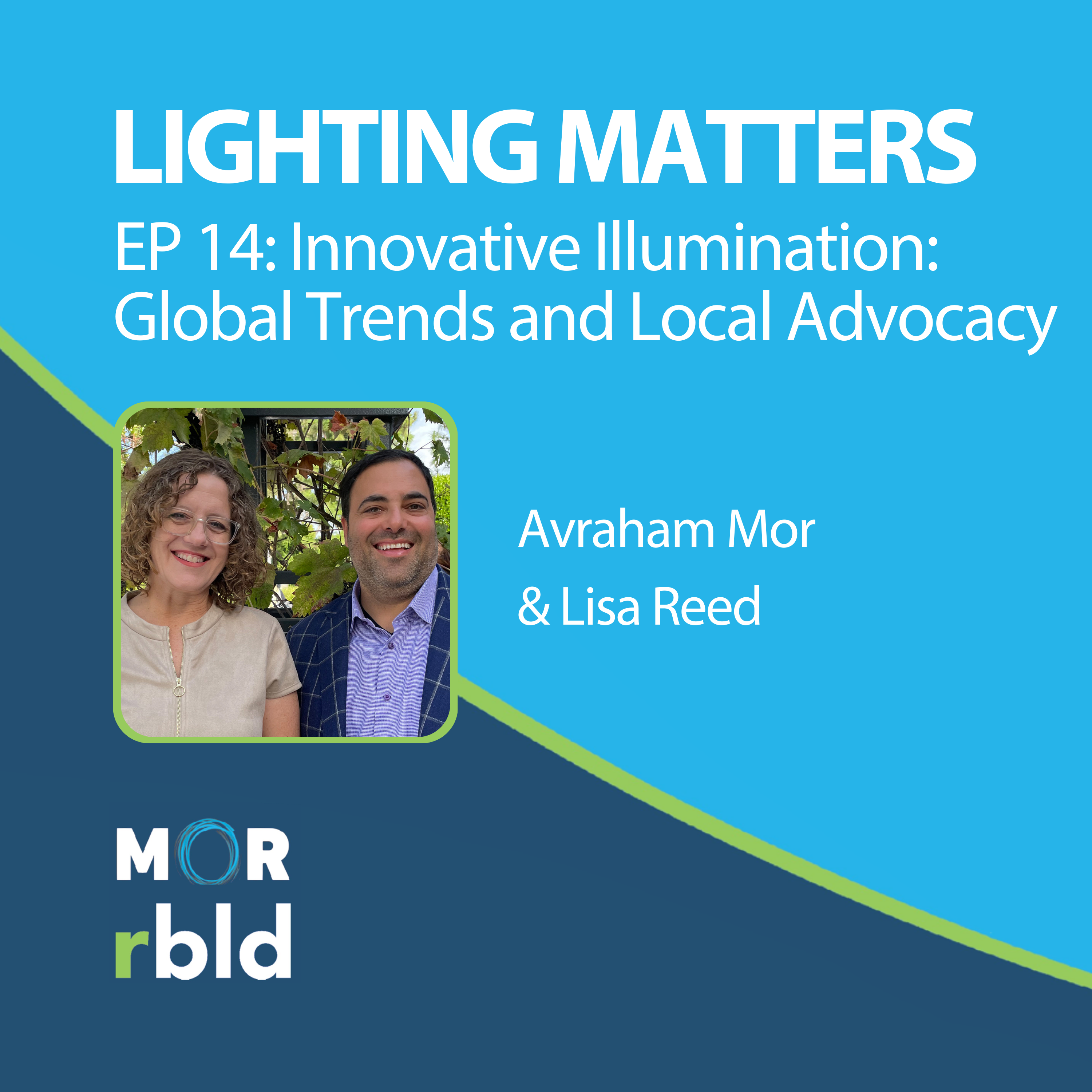
[00:01:11] Speaker C: Welcome to the Lighting Matters podcast. I am one of your co hosts, Avraham Mor with More Lights, and I'm here with my esteemed co host, Lisa Reed.
[00:01:22] Speaker D: Hello, I'm Lisa Reed with Reed Burkett Lighting Design, and I'm really excited about recording today's episod episode.
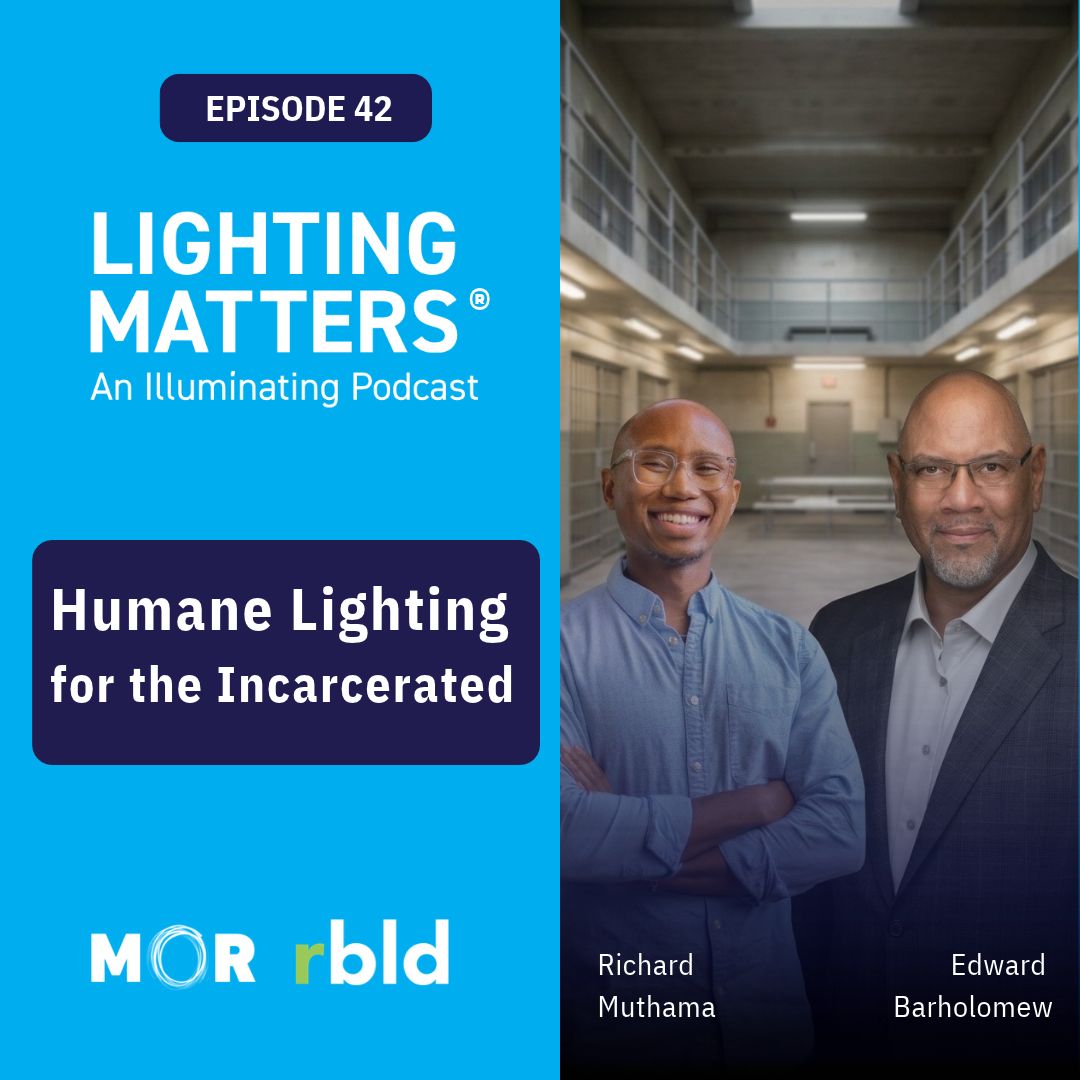
It's a little bit of a different subject than we've covered on the podcast before, but it's so important. And one of my longtime friends and associates in lighting design and a new friend in lighting design. So here with us today, we have Edward Bartholomew and Richard Mathuma Matthama.
I worked on it.
[00:01:54] Speaker A: I worked on it.
[00:01:55] Speaker D: But we'll just leave that blooper in there because, yeah, I am so far less than perfect.
I really appreciate you guys coming onto the podcast today, and I know there's a lot to share about what you're up to. So let's start with you just introducing yourselves.
[00:02:14] Speaker B: Sure. I'm Edward Bartholomew, principal of Bartholomew Lighting, my own firm located in Cambridge, Massachusetts, but also executive director of Light justice, and we are honored to be on this platform and to be speaking with you, Lisa, who's seen the whole arc of our path toward this. So it's just really good to have this.
[00:02:34] Speaker A: Yeah. My name is Richard Muthama. I'm a lighting designer with Lamp Partners based in the Cambridge office.
I am also the artery director for Light justice and vice president of Build, which is Black United in Lighting and Design.
[00:02:50] Speaker C: Tell us in the audience what Light justice is did a little research. We'll have a link in the show notes. But tell us a little bit about Light justice and what you're doing.
[00:03:03] Speaker B: I'm a co founder.
My good colleague Mark Leffler is also one of the founders. And we are basically an advocacy group supporting equitable lighting for all, both communities and occupants.
And we believe that everyone deserves good lighting and beneficial darkness. And so we have been around since 2020 and we are formally a 501c3 non profit. We just got trademarked as well.
[00:03:31] Speaker C: And hey, congrats.
[00:03:32] Speaker B: We are really excited about.
We've given. This is our third symposium. And so what we try to do is really expand the conversation around lighting to really look at its social impact and how in many ways lighting is actually applied in certain communities in a way that's not very beneficial. And so that's kind of what we really address. And we're not just looking at outdoor lighting, we're looking at interior lighting too. And hence why the symposium about lighting for incarcerated spaces is coming up on November 4th is so important.
[00:04:04] Speaker C: Well, and I think it's important to remind everybody that it's not just about how much light, but also lack of light. Right?
Yeah. And quality beyond that too. Right. There's a lot of different parts to this, this idea of light, and it's not just having it, but also not having it.
[00:04:28] Speaker B: And it has a direct social impact on us.
And you know, as I always say to my practice and what I do, we typically work for very privileged, powerful and well, you know, people who have means to pay for our skills and technology. Right. A lot of folks don't have that. Most people don't have that. I could not afford to pay myself to do lighting in my own house.
That's, that's the truth. I think a lot of us actually relate to that. But think about other people who have no idea that there's even a thing called lighting design or even quality lighting. They've been living in conditions where they feel they cannot change any of that. And that that's just the way it is. There are health benefits, there are mental health benefits or detriments that can happen when you have poor lighting. And we know this. And some people have access to better lighting and some people simply don't. And that's a majority of people who don't.
[00:05:20] Speaker D: I've never thought about ahead of this recording about how that really dovetails with lighting matters. The message that we've constantly been trying to get out there, how important lighting is and your Late justice is starting with that baseline of, you know, of course, lighting matters, and now here's what we need to do about it in these spaces where. Where it's been totally ignored. I really didn't think about that connection.
[00:05:47] Speaker B: Yeah. The research has confirmed it. So we know that lighting matters.
[00:05:52] Speaker C: Yeah, well, and you're also really hitting on another theme that we've talked about over the last two years on the podcast, which is the need for people to understand that there's this profession and this group of people called lighting design and lighting designers that actually pay attention to all of these things. And, and yes, as you say, sometimes or many times it could be a premium element. But I would say we probably all do a lot of things to make sure that the folks who need it have access to it. And I think that's what's so interesting about what you're talking about with lighting justice.
[00:06:30] Speaker B: Absolutely. One of the things that we do also emphasize is that communities and occupants can be educated and we can learn from them about their concerns about lighting. So we try to actually have them as partners, even in the design process, when possible.
[00:06:44] Speaker A: Yes. It's a thought of where we need to stop thinking ourselves as the holders of all the knowledge. So we tell them this, what's supposed to happen, but then allowing them to tell us what it is that they actually need. So it's also allowing them, we call it co educating. We don't want to educate them. Want them to also educate us. Yeah.
[00:07:02] Speaker B: And give them the language to talk about this, you know, so it really expands the conversation of lighting so far beyond kind of our little, kind of, you know, small expertise, but into the broader public so they understand those issues. And now, you know, how many times have we walked into our grandmother's or our mother in law's house and seen like daybreak bulbs and then warm white bulbs and all the whole range of colors in between, and they don't mind. And they're like, that's just the way lighting is. You know, we have a really, I think, a responsibility to improve those conversations and to help people understand that quality lighting matters.
[00:07:38] Speaker D: So tell me more about the co educating, though. Like, what kinds of things have you learned by listening and not just, you know, coming in and dropping knowledge?
[00:07:48] Speaker B: Well, I would say with some of the night walks that we've done, one of the challenges is that a lot of people think that more light makes things safer. And so we really push back on that. We show them what more light looks like and how glaring it is and how uncomfortable it is. And how hostile those spaces are.
And so then they come back and we show them what beautiful lighting looks like and how it makes people feel welcome and warm and give them dignity in those spaces. So once you see it, you can't unsee it. That's what we always tell people. And once they see it, and a lot of times we do these beautiful projects and we get these awards and we do these nice site visits, but it's the other projects, the other spaces that do not get that love. We show them the good, the bad, the. And also the beautiful. And, you know, we show them all of that. And so with that knowledge, now, they could articulate what they really want in their spaces.
[00:08:38] Speaker A: Also, one thing is that a lot of times we tend to think that we can come in and solve issues based on lighting, but you also learn that from the community, that beyond just giving them the language or the lighting that would work best, it's also helping them have more of a mind shift in terms of how they perceive spaces. So especially when it comes to outdoor spaces, we can tell them, oh, if you have low lighting, even lighting this. Warmer temperatures, but because they've lived there for quite some time and it's so ingrained in them that if they go here, this is going to happen. It takes also a process. It's not one of those things where we expect that once this is done, all of a sudden, like magic, that public realm changes. So it's also us learning as designers that giving a solution doesn't mean that it automatically changes things overnight.
[00:09:27] Speaker B: Yeah, they're dealing with trauma in a lot of these spaces, and things have happened, and lighting can only solve so much. You know, it's like we can't solve every social hill, but we can provide the space a little bit more dignified in that way. We hope we can help in that way. So that's what we try to do.
[00:09:43] Speaker C: We talk a lot on the podcast. That light is the great connector. And I think you're kind of. You're hitting on that a little bit. Right? Like, we can't. We can't do everything with light, but by bringing proper, appropriate, you know, gorgeous.
Use whatever, you know, words you want
[00:10:03] Speaker B: to use, but healthy lighting.
[00:10:05] Speaker C: Healthy. Yes, thank you. Quality, Right. All these other things that we do. Right. Like, it's another piece of the puzzle to make that environment right. And it's an essential one. Especially at night.
[00:10:20] Speaker B: Absolutely, absolutely.
[00:10:22] Speaker C: Or cloudy days inside.
Let's not forget. Right inside our buildings, too.
[00:10:27] Speaker D: Okay. I want to hear more about night walks and Just kind of what that looks like, just in case our listeners don't know. And then, Edward, you touched on light justice for interior lighting, too, and not just exterior. So if we can, like, take those two steps next, tell me more.
[00:10:45] Speaker B: We've done several night walks. We actually have done them throughout the country now. So several groups have actually done them. And basically we gather a group of people, typically from the community, but it also can include designers and other people who have influence, including government officials, people like that, who can actually change things, utility officials, things like that. And we take them on a walk and we explore neighborhoods. Now, it helps when we can explore a neighborhood that actually is in transition.
So we understand that socioeconomically they're going through some changes. And you could actually see that through the lighting. We become kind of like visual anthropologists or lighting anthropologists, in a sense. We're looking at how the lighting conditions actually change from one neighborhood to the other, and what has driven that change. Now, a lot of times we see flood lights up, we see overlit areas, and that actually identifies. Usually something has happened and the response from politicians and other people are to throw up floodlights and make that area appear safer. More light equals safety, and that is simply not true. So it's almost like a band aid that never gets taken off and more band aids get added. So these areas become, in a sense, over lit and over surveilled. I know we're talking current conversation about flopped cameras, but lighting is also an enabler to that sense of surveillance type of policing that happens in certain communities and doesn't happen in other communities. And then as you walk further away and get into certain residential areas that have a little bit more socioeconomic means, it gets a little darker, it gets a little bit more pleasant, it gets a little bit milder. And why is that? They see darkness as an amenity, as something useful, something safe. So it changes that. So you really start seeing kind of a transition in cultures happening as you do these walks, just from the lighting.
[00:12:29] Speaker C: And then tell us a little bit about what's applying on the interior.
[00:12:33] Speaker A: An example of an interior sort of like light walk that we did was part of a class at Wedgeworth. And what we did with the interior design students was basically ask them to give them a set of five questions. And it's almost similar to a night walk. But then we're trying to help them understand or start using certain language to describe lighting and stuff like that. And it's basically telling them to undercut places where there's good daylights. Within NHS space spaces where they think or feel like the electrolyting is lacking or poor, but also to speak to people who work there. So either cleaning staff or members of staff who are basically sat indoors the whole day and ask them about their space, how do they feel about their space? What is it about their space that they like, what they don't like? And we got so many varying answers. And what you come to realize is people who are not lighting experts still know how to articulate the lighting within their space. It's just they, they don't use the terms that we use, but they are not wrong and they're very clear. We just tend to turn, tend to try and have more technical language and all of a sudden we say, oh, they don't know how to describe. No, if you actually listen to them, they can really articulate how they feel within those spaces. So that was one example of how we did sort of an interior light walk with these students. And it was absolutely wonderful. The students loved it. Yeah.
[00:13:53] Speaker B: So you realize that access to daylight, access to control of lighting, all of those things are kind of based around within a building, power. Like who has privilege and power in that building and who doesn't. People in the bowels of the building, deep, you know, security staff, you know, facility folks. And they get none of that. And they're, they don't really feel they have any agency to change any of that as well. And so we really, you know, listening to them, understanding their experience is really helpful and helps us kind of find some solutions that could perhaps help them.
Now, our next symposium is actually on incarcerated spaces. People who have no agency whatsoever. And it's not just people who are incarcerated. It's also the people who take care of the incarcerated people. All of those people are impacted by light, both access to daylight, but also electric lighting.
[00:14:42] Speaker D: Yeah. So that's. I'm going to jump and then come back. But you're one of your colleagues. Leah first exposed me to even the concept of interior light justice. And the example that she used that was just so obvious was a restaurant. Avi, you've done a lot of restaurant lighting design and all of the money and all of the. Really concern about the design is in the part of the restaurant where people are spending some time, the least amount of time. Right. And then you've got people in the kitchen who work there every day, eight hours a day, and that's afterthought spot or it's just, you know, really poor or glary lighting.
[00:15:22] Speaker C: So it's a race to the bottom for back a house in a restaurant. Because the front of house is where you spend all the money.
[00:15:28] Speaker B: Absolutely.
[00:15:29] Speaker A: Yeah.
[00:15:29] Speaker D: Right.
[00:15:29] Speaker C: But like, I mean, we've been fortunate enough to say it's pack a house, just let us manage it. So then we can kind of squeeze in the low flicker.
You know, you still got to use a lensed panel here in Chicago because, you know, food rules and all that other stuff, but can have the right color temperature and not have 5 million foot candles and, you know, balance it a little bit.
[00:15:57] Speaker B: Right, yeah. Good quality color, good quality low flicker. You know, even some glare control. A little bit something, you know, so it's not so harsh.
[00:16:06] Speaker A: Yeah.
[00:16:07] Speaker B: Little things.
[00:16:07] Speaker C: Yeah, yeah, yeah. It is interesting. Right. There are those flat panels that are like $2 and the fat flat panels that are $20, and the $20 ones actually have a lot more glare control and it's still a flat panel. It's just the difference of the.
[00:16:24] Speaker B: I think it's. I think for our industry that's a missing opportunity.
[00:16:27] Speaker C: Yeah.
[00:16:28] Speaker B: Because I really think it could be a quality flat panel that actually works really well. And it's, you know. Yeah, right.
[00:16:35] Speaker C: It's funny, Lisa and I talked about a school district that we were working with that was suspended linear fluorescent, and they wanted to update the led.
And the cost of a linear suspended LED is just amazing.
Blown away at the cost. And we're not talking about fancy stuff, we're talking about, you know, white goods, contractor select type things. And it's really unfortunate, but the most cost effective thing was to rip all that out and go to two by fours.
[00:17:09] Speaker B: Yeah, yeah.
[00:17:10] Speaker C: Even with new electrical infrastructure. Right. So there's like this, this other core problem of elevating the profession, elevating quality, all of these other elements and getting people to understand that there is a value to it. And then I think there's a lot of fighting back on the manufacturers for just making too much money on a nicer flat panel. Like really, what is it? A sheet of acrylic that changed? I mean, come on, like. But I think it would take a lot more of what you guys are doing, Right. Like, really getting the, the customers to advocate for better environments.
[00:17:53] Speaker A: Absolutely, absolutely.
[00:17:54] Speaker B: Yeah, yeah, yeah. School is a great example. Another thing that we've done at Light justice is have Light Justice. Now are awards where we celebrate projects that have community impact. And a recent one was we celebrated at the IES conference. Actually celebrated a high school in Compton, California. I'm from LA and I know Compton, and it's definitely a neglected area. But that high school got an infusion of money from Dr. Dre, and they did an extraordinary job. And the lighting is beautiful. And so if parents knew the impact that light could have on student performance, they'd be all over that. They'd be all over that. They wouldn't do any flat panels. They're like, no, no, we want quality lighting. Because even if you inch up student performance by this little bit, 2, 3%, that has such a huge impact on funding and on, you know, just graduation rates and all the issues that happen, even behavioral issues, can be impacted by lighting itself. And we'll talk a little bit more about that as well.
[00:18:52] Speaker C: We recently had somebody on the podcast talking about this idea where, you know, what light can do in a classroom, what light can do in these facilities, and talking about. About the fact that, like, maybe we don't have the scientific research, but we need more anecdotes, more white papers things. And is that something that you all are working on?
[00:19:21] Speaker D: Yeah, I think we. She was saying we. We kind of. Maybe, maybe she didn't say this, but what I heard was we use the excuse of, well, we don't have scientific research, but we've got all the stories, and let's just tell the stories.
[00:19:33] Speaker B: We actually have scientific research on this, too. There actually is some stuff. And I've done a deep dive into lighting that supports schools, so I have actually seen some of those papers. And Alicia Hevshon, of course, has done some amazing stuff with daylighting. One of the committees that we have within Light justice is actually called the Content Committee, and it's headed by Kate Sweater, and she's delightful. And. And what that's going to be looking at is, you know, what are the other aspects that Light justice can address and how can research support that? So I'm really interested in both. But Light justice actually having an impact both in research. We actually have an education committee talking to schools and actually encouraging them to look at this type of research. We want to also encourage students like Richard, who did a thesis that we are now expanding into a symposium and all those things. So we want to take those ideas and expand upon them and give them a platform and take them further. Then, you know, Richard finishes at Parsons, he does his thesis, and now it could be something even more impactful within our industry and within society.
[00:20:38] Speaker D: Something I've really appreciated through my career through the last several years is how Light justice.
You all make me think about things that I didn't think of before. So, like I said earlier, I didn't think about interior light injustice. And so you mentioned, just briefly, the upcoming symposium about light for in incarcerated spaces. Is that what it's called specifically? And that was your thesis, Richard?
[00:21:09] Speaker A: Yeah, originally. Originally, yeah. So my thesis was looking at trying to normalize and introduce humane lighting practices within spaces of incarceration. Because how it started was I wanted to do a feast. One of my professors, Francesca Bastianini, we had a class where we were talking about, or we asked, who can afford lighting? Is lighting a luxury? And it's the first time I ever thought about that. I was like, oh, I'm just, I'm just a designer. It's great. It's going to be so cool. Everything I want to do is going to be cool. And then when she posed that question, it was almost like a light bulb. I was like, wait, who can actually afford the services or what I'll be doing? And quickly enough, it was people with money or privilege that can afford what I can do. And so when I was going to now look at my topic for my thesis, I was thinking about what sort of like marginalized communities are out there. And one of the things that I know is sort of uniquely to unique to the US is the just the size of the population within spaces of incarceration.
And that almost made me think, okay, do we have any standards for these spaces? Because I mean, there are over, I think probably now over 2 million people within these spaces. Surely there must be an RP somewhere. And shock. To my shock, there was nothing. The last thing was in the 10th edition of the yes Handbook, which was probably like in 2016 or 20, something like that, very, very early on. And it's a very, very small section within the handbook. So my thesis was looking at, okay, what would it look like if we updated it or we started looking at changing what it looks like within these spaces. So I was mainly focused on the sleep environment, so the cell and the day rooms. And then from there we did, we had our first symposium, skin symposium on indoors. So I joined that symposium as a panelist. And then after that symposium I joined the IES Technical committee for Security Technical Committee, where we actually now wrote down and put out our first rp, which should be coming up next year. So it's an RP for spaces of incarceration. So taking a lot of that research that I was doing, now putting it into the rp, but then also joined by all these professionals who either design for these spaces or are interested or have a spouse who works in these spaces. So it was very interesting and collaborative Where I was like, wow, just from thinking about marginalized community to, oh, this could actually help impact the spaces that are designed for them. Because it makes no sense where they spend all this time in these spaces. They have no control. But then we as designers get to see what those spaces look like. I mean, to an extent, yes, we have the facility operators who dictate that. But then it's our duty to sort of try and educate them as well. There's a bit of pushback because they have different priorities. But then we as professionals, and that's with the experts we should be advocating for, you know, for more humane spaces.
[00:24:03] Speaker B: I just want to kind of tie into humane lighting for people who are incarcerated. What does that look like? And how can. And how can we support that? It's very different than creating spaces of punishment. We're talking restorative spaces so that people coming out of those facilities actually rehabilitated. Absolutely. And so that's a different mindset. Even in America, America's a lot about punishment. I mean, we were almost going to televise a shooting, happening, things like that so that, you know, to create something humane, really. Looking at models typically are in Europe and other places that they're looking at rehabilitating their prison population and incarcerated populations and mental health populations. Those folks are absolutely dealing with trauma. They're also dealing with people who are on the spectrum, all those neurodiverse issues.
Lighting has a huge impact on those populations. And so paying attention to that, applying what we do know and what's been confirmed through science and research, applying that seems like a no brainer.
[00:25:06] Speaker D: Yeah, well, and the little bit that surprised me earlier in the show when you said, we're also thinking about the people who work in these spaces that just didn't even, you know, lighting for incarcerated spaces, I'm thinking, okay, yeah. And then, oh, yeah, this is somebody's workplace too.
So I love how you make me think all the things I didn't think of before.
[00:25:30] Speaker A: That's our goal.
[00:25:31] Speaker D: Yes, it's good.
[00:25:33] Speaker C: So I want to know more about the symposium, but I wanted to ask.
Another kind of topic that's come up often on our podcast is we are a very small cog in the larger construction and design.
[00:25:50] Speaker B: A pull on the butt of construction.
[00:25:52] Speaker C: As I say, we try to make
[00:25:55] Speaker D: it sound a little better than that.
[00:25:57] Speaker C: Well, well, sorry, I was going like a specific place here, which is that some of us, you may have been out in Texas at ild, we have ies, we have Light justice, Women in light. We have all these organizations. And I guess I want to pull apart a little bit. Like when Light justice came around, why did you feel it needed to be its own entity?
And do you see as you're starting to see, and I'm starting to see it in your symposium. Right. Like some of that merging with other things. So we could potentially be as an industry a larger voice than lots of smaller voices.
[00:26:38] Speaker B: Absolutely. Yeah.
[00:26:39] Speaker C: Yeah.
[00:26:40] Speaker A: I was going to say, I think one of the things about Light justice is its focus might seem broad, but it's actually very, very unique in terms of what we're trying to achieve. Yes, there are lots of many other social advocacy groups, but then a lot of them tend to focus on us as an industry.
So women within lighting design, it is lighting designers as practitioners.
A lot of these organizations are inward facing about our well being within the industry.
And I'm yet to see another organization that is fully, fully mandated or fully looking at the users of our spaces or those who cannot access our services and putting them on a platform. And we say we as an industry need to consider these people. So I think that's what's unique about us. We are more outward looking in terms of what we are trying to do as a mission, but there is room and scope for everyone else to come in. We're not saying that because it's like Justice. We have people in our organization that belong to other organizations because the crossover
[00:27:42] Speaker B: is not that Pretty much every organization
[00:27:45] Speaker A: is in Light justice because it doesn't overlap in terms of their mission. Because our mission is very specific in terms of outward looking.
[00:27:52] Speaker D: That's well put. Now I'm trying to think because I was even thinking you're involved with Build, but that's more internal looking.
[00:28:03] Speaker B: One of the things that's really cool for the symposium is that having people speak at the symposium who have had lived experience, they are not experts, they are not academics, they actually have lived that experience and getting their input about what those conditions are and how, you know, what they think could be addressed in those ways, that's incredibly powerful. Now when we go to conferences, a lot of times we don't really hear from people who are actually impacted by the environments that we are lighting.
[00:28:30] Speaker C: So tell us more about the symposium.
[00:28:32] Speaker A: When, when it'll be November 4th from 12 noon to 4:30 Eastern Time. And it will be virtual so it's easy for anyone to join. You don't have to do any travel, just put on your headphones, listen in, join the conversation and you're going to have a host of different I'd say experts and lived experiences. So we have someone who was formerly incarcerated, we have lighting designers, we have manufacturers, we have criminal justice specialists. And so the idea is looking at how we as lighting as an industry can move towards where architecture and interiors has been doing for a few years now, where looking at trauma informed design. And we'd like to borrow from those, you know, from those areas where they already have, have already a footing in that space. And how can we as an industry start pushing for that more often? And it's almost as though spaces for incarceration is almost like the beginning of it, you know, to try and almost like anchor it. And then how can you now move this forward into other spaces? That's where marginalized communities exist in. But yeah, it's all about cross discipline, collaboration.
It's three moderated panels. The first one looks at existing conditions. So what is it like in current environment within prisons? Talking to lived, experienced person, talking to criminal justice experienced person and somebody who's an advocate for these spaces. The second session looks at what are these trauma informed design proposals that we're now start to see in some of these projects. So we have an architect, we have manufacturers who are asking, what are you doing as a manufacturer to try and push this forward? What are you doing in terms of the form factor of fixtures, the light output? Why should we have a two by four that is pushing out 5,000 lumens within a cell? That makes absolutely no sense. And then talking to people who have done research in terms of how are these things being implemented within prisons? Are there any difficulties? Are we just saying, oh, it'd be great to do this and let's just do it without thinking, oh, what are the consequences of trying to implement this? Especially from a policy standpoint, from a mindset standpoint? Because this thing is really about how we as individuals expect something to be built because of what it represents. So for example, prisons, if you tell the general public what a prison should be, there's like, oh, a place to punish those who've done something bad, but that's not inherently what it's supposed to be. Would people question a prison if it actually looked almost like a regular apartment, a livable space? They wonder why is it so fancy? That's not a prison is so overcoming those mindsets as well is something we'd like to talk about. And then the third session, we're looking at case studies. So we have one architect talking about projects that they've worked on and actually showing us fully finished projects that have been Implemented with trauma, informed design practices. We have a lighting designer who's currently working on one of the borough based jails in New York. So we're talking about the process they're going through and then bringing back the advocate and talking about what are the ways that you can also participate in this. That is advocacy, trying to influence policy. So talking to formerly incarcerated people, trying to come up with policy solutions that they can push forward to our local level leaders and stuff like that.
[00:31:46] Speaker B: Yeah, making those spaces more humane, making them work better for people.
And so, yeah, besides being lighting experts, how do we influence policy? How do we get it out there? And we also have an environmental psychologist who's really going to talk about kind of bringing it all together and what's the impact of the environment on these people in these spaces and how lighting can influence that. So by expanding this conversation, both with practitioners, advocates, lived experience and even academics, it really broadens our conversation around lighting and what the impact of lighting can be. And to Richard's point, this is just another symposium that we are really kind of narrowing in on certain aspects. But those aspects have a universal appeal because as we treat the least of us, we could also treat the most of us as well.
[00:32:32] Speaker D: That's amazing how you've taken something that sounds very narrow and you've got a really broad variety of speakers and topics associated with it. It sounds really good.
[00:32:42] Speaker B: Thank you. I'm incredibly excited about this. But this is awesome. We don't have these conversations in lighting and this is really the way Richard structured it and everything. It's just really going to be a dynamic conversation. And we've had similar symposiums. The previous one, how people were inspired to the extent of other things came from that. So we never know what's going to be spawned from these conversations. So it's exciting too.
[00:33:08] Speaker C: And I think Richard, in those sessions, it sounds like you also have a little bit of how this improved the environment.
I'm a big one to say okay, but it still comes back to dollars. Right. So how do we, how do we bring all, you know, I don't know, maybe it's just the way I would, you know, but when we do all these great things, right, like less incarceration or less time. Right. Like I'm assuming there's some of that too.
[00:33:37] Speaker A: That absolutely, yeah, yeah, yeah. And that's why we have, especially the third session that looks at case studies is the main question I keep asking is like, how did you convince them to do this? It's always like, you know, at the end of the day.
Whether you like it or not, most of the private prisons in the US is a business. It's a money making business. Right. And the fact that they are managing to convince the operators and the owners of these spaces to actually put well being of the occupants first or balancing that, you know, well being and cost at the same time, I think that's for me what is most fascinating. It's how are they achieving this in a space that is, tends to be
[00:34:18] Speaker B: so rigid, you know, and giving them that language around lighting. You know, we, we've not been at the table, you know, we've been ignored. So now how do we impact not only policy but just standards of how these spaces are made? Right now, you know, the US is building all these detention centers and things like that. There are no standards for that stuff. And so, and they're not humane. And so how do, how can we have a, have a seat at the table to help regarding those standards and things like that?
[00:34:45] Speaker A: So actually there's somebody on the, in the first panel, she's actually in contact with someone who is in one of those detention centers and has been there for a year and saying how they have the lights on 247 and it's making it impossible for them to sleep. So it's having those sort of like conversations and having, hearing those stories because we know it happens, but actually hearing it from, you know, lived experience.
I think it sort of like grounds it into our reality as well because we will probably never be in those spaces to experience such what we're designing or what we are putting in there for them.
[00:35:17] Speaker C: Knock on wood. Right? Like. Yeah, yeah, hopefully.
But yeah, well, there was that one
[00:35:24] Speaker A: time, you know, we should hug you in the symposium.
[00:35:31] Speaker D: Yeah. I also appreciate, Richard, that you're, you know, you're on an IES committee and you're working on writing recommended practice around all of this and really taking action. That's.
[00:35:41] Speaker A: Yeah, yeah. I think the one thing that I would probably try and do because for us rps are not enforceable. It's just a recommendation at the end of the day. But you have things like the American Correctional association where they put out a guideline and almost like lead, if you meet the criteria, you get certain sort of like points for meeting everything within the, within their guideline. And currently when it comes to lighting, all they have is 20 foot candles for lecture. Like 20 foot candles. The end. So you're like, oh, where, what time for what? What's the task? What is, what's the spectrum temperature?
[00:36:18] Speaker D: What's the yeah, there's so many.
[00:36:20] Speaker C: It's so 20 foot candles.
[00:36:23] Speaker A: Because nothing else.
Based on the. By federal law you must provide 20 foot candles. And this comes from a history of prisons being sued for not having enough lighting. So the solution was 20 foot candles, full stop.
[00:36:39] Speaker C: 20 foot candles across the port.
[00:36:41] Speaker A: So if you did 50, if you did 100, if you did, didn't matter. 1,000 foot candles. That's neither here nor there. And looking at the 8th amendment in terms of cruel punishment, it's very hard for you to prove that your space is overlit and the operators did that willingly to punish you. So it's also a catch 22. So trying to get into things like the ACA guidelines where that such that people try. It's almost like a little gimme fight for them. If you can provide this good lighting, you get better points, you know, sort of thing.
[00:37:13] Speaker D: Maybe we could talk about good lighting for a minute.
Ed lets you have more on this topic. Abhi, we always like to ask.
[00:37:23] Speaker B: Yeah, there, there are ways to apply good lighting to incarcerated spaces. There are ways to really pay attention to quality darkness and so that people can still have sense of custody and what's occurring and security in these spaces and see what's occurring. But do they need to blast the lights? Can we work with amber lights? We actually have, there's a case study, actually I think it's Norway where they actually applied that and they were noticing that aggravated behavior actually went down, things like that. And we know that there are studies out there looking at mental health and suicidation and things like that based on the impact that lighting has and not, you know, both. Quality darkness is important for people to have restorative sleep, but also good quality daylight, access to daylight. One of the speakers is going to talk about that and how that has a huge behavioral impact.
You know, we've had Lisa Heshon, who you know we love, speak to our interiors symposium, but there's such a huge disparity as far as who gets access to daylight within prisons and even recreational spaces. We have a speaker speaking just on that. And so these spaces, transforming them from places of just strict punishment to places that are rehabilitative, need to really look at those things. We are biologically based on light. And so if we don't address those things for all humans, then what are we doing? It's not, it's not humane.
[00:38:45] Speaker D: Well, and you know you, you also touched on. In case somebody doesn't care about humanity, you touched on a point that like makes it to their benefit because you're going to have better outcomes, better behavior, better.
[00:38:59] Speaker B: That saves money, by the way.
[00:39:00] Speaker D: Yeah.
[00:39:01] Speaker B: People get out.
[00:39:01] Speaker D: You got to come back to the money.
[00:39:03] Speaker B: It's a safer space. You don't have to over, you know, have so many, you know, people, you
[00:39:08] Speaker C: know, and staff turnover. Right. We all know running our businesses, finding a new.
Absolutely more expensive than trying to keep
[00:39:17] Speaker B: the person, trying to find a prison, guards and things like that, that's literally their job. And le. Having them leave because of migraines, because of all the other conditions that we don't even know about.
[00:39:25] Speaker C: Sick leave, whatever may be. Now you're understaffed now you're not meeting the requirements for the number of people and.
[00:39:33] Speaker D: Right.
[00:39:34] Speaker C: There's a lot of pieces to this that you know when you're just looking at a two by two for $20, you kind of forget about all these other things. And it's so important what you're talking about. Bring all of this up to the forefront and think it through fully. I mean, they're not building it for one year.
[00:39:52] Speaker B: No, no, not at all. Yeah, yeah. And it is one of those things. You kind of start digging at it and suddenly it opens up into this vast thing like. Oh, I hadn't even thought about that. Are you kidding me? And I'm sure we won't even cover everything we need to in the symposium, but we're happy to bring the players together at least to have that discussion. We're really excited about that.
[00:40:12] Speaker D: That's so great.
[00:40:14] Speaker C: So people are interested in the symposium, can find it how where?
[00:40:21] Speaker B: Both at the IES website. Because we're co producing this with the IES DEIR committee. So they're one of our co presenters or I would just say collaborators, collaborators, collaborators on this. But Light justice is the lead. So you can find it both at our site, a link to the program and on the IES website. And it will be recorded and live on the IES website as other symposiums are actually recorded right now. And of course you can get CEU and all kind of credit for watching the symposium, but I invite everyone to watch it and be inspired because it goes far beyond places of incarceration. It goes into pretty much all the different levels of building types that we're looking at and how that could be impacted by light.
[00:41:03] Speaker C: Amazing.
[00:41:04] Speaker D: That's great. I was just going to ask if either of you wants to share what your favorite illuminated space. This is kind of how we end our show every time.
[00:41:14] Speaker B: So I could tell you one of my favorite spaces is my Grandmother's living room. When I was growing up. She had these couches that were like orange, these padded quilt couches.
And the lighting was from this floor lamp that had these beads on. It is the 70s. So I'm just dating myself.
[00:41:31] Speaker D: Like I'm totally checking with you. I think this is my grandma's house.
[00:41:35] Speaker B: Yeah. Warm and welcoming. I remember sitting there and she had this candy tray. And of course I'm like taking candy left and right, but always felt so warm and welcome in that space. And I realized that my childhood memories are a lot based on light. I was really surprised by that, you know, and like how I recognize places by the. How the lighting was. I'm like, when did that start? You know, so. But that I do remember and I definitely had a picture of that that I actually took on Ektachrome, if I always remember that of that living room. So that's one of the warm feelings I like.
[00:42:09] Speaker A: It's so funny because let's say not my commas but where one of the homes where we grew up. So I'm from Kenya and so we have, I'd say really great daylight. And I grew up on the coast and grew up in a mid century style home. So imagine massive windows, pretty light, terrazzo flooring. And as you're speaking, I remember when I moved to Boston the first time and I was looking for a place to live and somebody showed me a photograph one place I was like, oh, I love the place. The amount of daylight is amazing. So thinking about where I grew up, dead on the equator. For me, that one home where we grew up, maybe I think it was about four or five years when I was growing up. Just the amount of daylight I would fly in that space and it was pretty open.
Massive windows. Now everywhere I go I just, I cannot be in a space that's not or live in a home that doesn't have as much daylight as where I grew up.
[00:43:00] Speaker B: Yeah.
[00:43:00] Speaker A: And at heart, which is funny, I live now I live in Boston where It's sunset by 4pm during winter.
[00:43:08] Speaker C: Yeah.
[00:43:09] Speaker B: Not Boston.
[00:43:11] Speaker A: Somerville.
[00:43:13] Speaker D: Hard to get as much daylight as you had growing up. I've heard that the sunsets there are the best in the world.
[00:43:20] Speaker A: They are beautiful. So, so beautiful.
[00:43:23] Speaker C: Well, thank you both for sharing with us. Very excited about the symposium. I am definitely convinced and looking forward to joining and I really appreciate you both taking the time and joining us on Lighting Matters.
[00:43:40] Speaker B: Thank you for having us. We truly appreciate it. Yeah, it really means a lot to us.
[00:43:44] Speaker D: Lighting Matters. As we wrap up, we want to reiterate how much we value your time, and we hope you found it as much fun to listen to as we had creating it. Remember to like it and share this content with your friends and colleagues.
[00:44:00] Speaker C: The opinions expressed are those of the participants and do not necessarily reflect the official positions of of the sponsors. Our content has general application, but we recommend obtaining personalized guidance from a professional IALD lighting designer such as RBLD or Morlights for your next endeavor.