Episode Transcript
[00:00:02] Speaker A: Welcome to the podcast about Lighting matters. Our unflinching conversations uncover the nuances and complexities which shape the craft of lighting design.
[00:00:11] Speaker B: We explore the pivotal whys behind a lighting designer's choices and find honest answers to your most challenging lighting questions. Because lighting matters.
Welcome to the Lighting Matters podcast. I'm one of your co hosts, Lisa, coming to you directly from Neocon in Chicago. And I'm here with Avi Moore.
[00:00:38] Speaker C: Hi, everybody. Avi Moore with Morlights And we are at illuminate@neocon. This is 2026, the inaugural year for.
Super excited to have the show here in Chicago and really excited to have Rebecca with us. Thank you so much for joining us. Tell the audience a little bit about yourself.
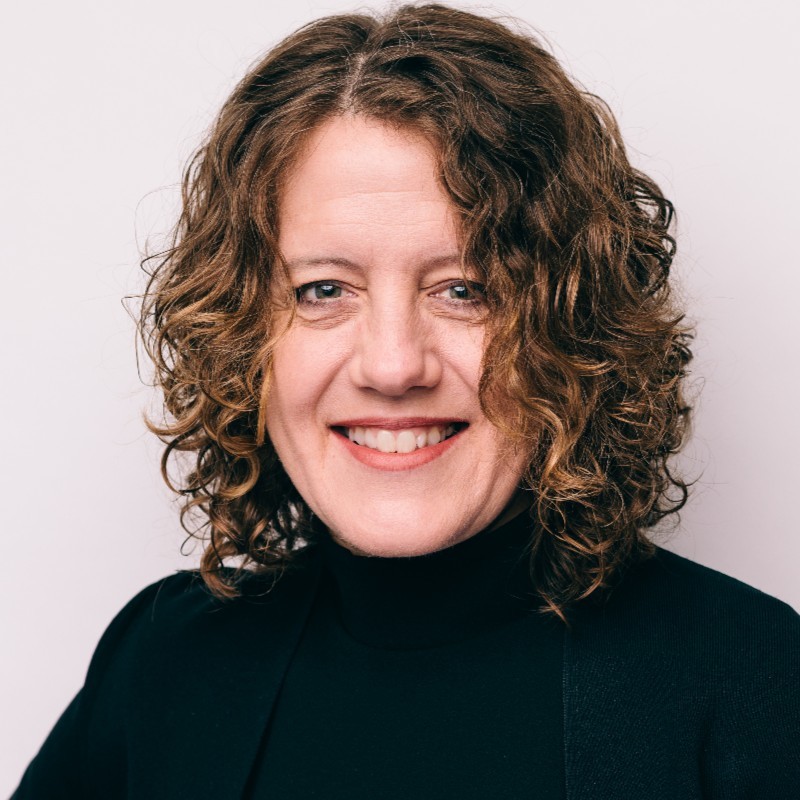
[00:01:00] Speaker D: I am Rebecca Keener. I'm a senior interior designer with Stantec Architecture. We're a global architecture and engineering firm. And I had the pleasure of also joining a panel with my current co host the other day at the Lighting that Sheep's Design panel discussion, which was really fantastic.
[00:01:20] Speaker C: It was so poignant. I thought it was so great. And I didn't realize the level that we were on. Like, that's the main stage.
[00:01:29] Speaker B: Yes.
[00:01:30] Speaker C: Holy cow.
Yeah.
[00:01:34] Speaker B: Yeah.
[00:01:34] Speaker D: I feel it was difficult to hold answers to a minimum because I think for almost every topic I had like an addendum of that would have rolled out across the floor. And I tried. So even the, like, the questions that were like one answer, this, this, or this, and I'm like, but there's contingency, there's qualifications, there's underlying circumstances. And it was like, but I'll just pick one. I tried.
[00:01:59] Speaker B: Is that because that is how you look at the world, or is that because lighting is just that nuanced and complicated?
[00:02:06] Speaker D: Well, that's how I look at the world, which includes lighting. So everything's nuanced and complicated. There's never one, you know, particular. It's always gray. It's always complex, and every situation is unique everywhere.
[00:02:20] Speaker A: Always.
[00:02:21] Speaker C: Yeah. I mean, no school, no office, no space ever designed is the same. There might be some lessons learned and things that you can apply, but you know, it's a year later, it's a moment later, things change.
[00:02:38] Speaker B: Absolutely right. There's a process, but how you weave your work in and out of that process is completely different.
[00:02:46] Speaker D: And then there's like new technology, new design styles, there's different client with different needs, there's different technology.
It's really. And then, you know, the style that you're attempting to achieve already makes it, you know, you're going to Have a unique set of circumstances.
[00:03:04] Speaker C: Absolutely. Well, one of the things you said on the panel that I know Lisa and I want to dive into a little bit more was you're talking a lot about like the triangle of responsibility.
[00:03:13] Speaker B: Yeah.
[00:03:14] Speaker C: I'm wondering if you could describe for the audience a little bit more about that triangle and then I'm sure there'll be some follow up questions.
[00:03:21] Speaker D: It's kind of a simplified Venn diagram of lighting design. How lighting gets into an architectural project or an interior project.
The architecture interior designer is one piece of that pie. See, I'm flipping metaphors. I've got a Venn diagram, a triangle and a pie. The arc and interiors is one, the lighting designer is another and the electrical engineer is another.
And so on a project that doesn't have a lighting designer, it's going to be between the architect, interior designer and the electrical. And there's going to be an overlap where electrical is taking care of circuiting and panel design and all of that. And they are helping to spec the lighting interiors is choosing what they want the light to do, choosing the focal pendants and looking at what I want my ceiling plane to look like for ceiling mounted items in terms of, you know, the general, like, is it going to be a grid? Are things going to be grouped in a certain quantity? Is it going to be scattered? So that's the interior's vision. But then it's up to the person controlling the calcs to decide, well, okay, if that's your vision, how bright should each of these lights be? So forth. So. But what the lighting designer brings bridges that gap and helps to speak the design language and the electrical language to make a more informed design.
So it really helps to take some of that technical burden off of the interiors person and it takes some of the design burden off of the electrical. And it creates this. It's an, it is a. Its own discipline, but it just marries really well with the other two.
[00:05:06] Speaker C: So you're hitting on some of my favorite themes when it comes to lighting design.
Connecting, translating lots of languages that we have to speak.
[00:05:16] Speaker B: Bridging. Bridging. Yeah, that's.
[00:05:18] Speaker D: Yeah, for sure.
[00:05:19] Speaker B: That's great. And I just before we like go run with this topic because it's really good just to be clear for our listeners and you're talking about all of these disciplines exist in one firm.
[00:05:32] Speaker D: In my case at Stantec, we have all of these disciplines in house. So I am working with my colleagues on a daily basis. But for a firm that does not have these engineers in house, then Going into a project, you need to include them in your scope.
[00:05:49] Speaker A: Yeah.
[00:05:50] Speaker B: Okay, so now let's go. Go ahead off to the races.
Well, one of the things you also said yesterday is how there's one fee for all of this and the amount of scope that each person takes on can. Can vary. So I was curious how you determine that in your office, in your projects. When does the lighting designer have more scope? When does the interior designer have more scope?
[00:06:13] Speaker D: And I'd say in that particular panel discussion, our time was limited and it's nuanced. It isn't as though there is always one fee and everybody takes a chunk of it because you get what you pay for. And the intent is kind of following on what you had said in the panel that lighting design is being done whether you have a lighting designer or not. It's just, do you have the person that has the best skill set focusing on the lighting design, That's a lighting designer.
So you're paying for time, expertise, knowledge, and so forth. So in general, your scope overall for that whole triangle needs to make sure that it is getting the giving all of the professionals the time to do their best. So there isn't. You aren't cutting corners by adding a lighting designer. You can reduce scope of interiors and electrical, but you need to make sure that the scope that remains for each person has given them enough scope, time, schedule, fee to each still do their best. Because ultimately the lighting designer is also bringing value to the project.
And so it's not just about squeezing in as many people as you can for one, one fee scope, if that makes sense.
[00:07:32] Speaker C: Yeah, yeah. We talk a lot when we start with new clients or even existing clients. Like, we started off the conversation. Right. Every project kind of has a little bit of different tweak or desire or need, and we always start with that. Right. Like, this is our standard operating procedure. This is how we're going to do schematic design. This is how we're going to do design development. This is what we're going to deliver in revit. This is when we're going to deliver what in revit. We were talking to somebody about drawing drivers on a drawing. Yes. At like 90% CD. Right. We know what we're doing. We know where they are. We've talked about where they go, but they're not on a drawing yet because we don't want to change it five times. Right. So I think it's so important to define that and get in the weeds. Because I also find that being an outside consultant typically almost Every time. Right. Making sure that we all discuss that early on. Because the person who reviewed the proposal isn't the project team, that's more of the finances and maybe a high level project manager versus the actual team doing it. The actual drafters, the actual Revit modelers, really getting into those details.
[00:08:51] Speaker B: I have a question.
[00:08:51] Speaker C: No, no, no, sorry, I just. It sounded like a very cold statement.
[00:08:55] Speaker D: Well, I would say that, that I have been using revit for about 22 years. I was trained on it, luckily when I was an intern back a long time ago. And so I can't beat that.
I use Revit as a design tool also.
So I am also incorporating generic lighting models early on as part of the conceptual design with Revit and Enscape so that we can be forming that early lighting design so that we're making sure that we're coordinating with our mechanical and our ceiling mounted items and our wall mounted items kind of early on to at least hold space and to hold structure so that we can begin with those big kind of general conceptual lighting design.
And at that point, that is when I began working with our lighting designer. In fact, one of our fabulous lighting designers, Rachel Fitzgerald, just spoke at Neocon.
Yes, exactly. And so I work with her and her team early on and then we start to lay out potential scope for that. And so we do try to do it as early as possible. Then you get into the real nuts and bolts during CDs as far as the specs. And that's where the lighting designer also has the best familiarity with, especially your spec specific, like I want to say, your functional lighting or the function of the lighting, and then the aesthetic quality. They can dial it in based on what the designer's vision is.
[00:10:26] Speaker B: Right, right. I. Yesterday I was talking with a manufacturer and I'm going, I'm going to get the number wrong. But they have found through AI that they have something like, I don't know, I'll say 700 million different ways to build a lighting product. And so you need a lighting designer who cares enough to get every letter of that specification correct for sure. Because otherwise you're going to get a different fixture.
[00:10:51] Speaker C: Yeah, well. And as somebody who also helps lighting designers price things, you can't get the pricing right. Yeah, right. I mean, that's the other we kind of touched on a little bit. But just making sure the budget's aligned, you can't get it right unless you have every part of that part number. Right. And there's a lot of assumptions that end up being made when it's not right.
[00:11:14] Speaker A: And.
[00:11:15] Speaker C: And then, yeah, it's very complex.
[00:11:18] Speaker B: Change one of those digits and you just. The price of the feature.
[00:11:21] Speaker D: Yeah, yeah.
[00:11:22] Speaker C: But I also want to cautious. We talked a little bit about complexity of lighting, but really, you know, we're washing, we're grazing. Right. It's a design media and I think the complexity comes into those 7 million options.
But light's light, right. And it doesn't bend corners, it doesn't disappear. Right. And I wonder, as you're approaching, right, you talk about that. It changes. Every project's a little bit different. Are there some things that you're just like wowed that light can do on your projects?
[00:11:57] Speaker D: I mean, I think that I'm a huge fan of indirect lighting, especially linear lighting, the different effects that light can make to a space. So, you know, as far as like illuminating a room and thinking about, well, I'll illuminate the ground plane so people can see where they can walk.
Yes, that is nice. But what is very cool also within codelimits is to more focus on illuminating the objects you need to navigate about in the room. And suddenly your focus isn't on the floor unless you want it to be. Your focus is on the kind of you're keeping your head up and looking around. And it's a different physical interaction with the room. You're seeing further or closer depending. And then. So the light can really control where your eye goes and in what order your eye sees the room and tells you what you want, where you want to go next.
[00:12:51] Speaker C: Yeah, it's an old theater trick that you light stage left while they pull the desk away from stage right. It's there and if you look real hard, you could see it. But since stage right so bright, you know, you can have, you know, crew come on and remove people. Right now, we're not same kind of thing, Right. We can point people to a reception desk. Right. We can point people to the desk in the front in the hotel.
[00:13:19] Speaker B: Absolutely. Yeah. I love the way finding aspects of lighting and I think about it all the time, when even just the direction that you orient a fixture can impact how people move through the space.
I don't know, maybe I like to control people.
[00:13:34] Speaker D: I'm a little amazed for people.
[00:13:38] Speaker C: So one of the questions we always like to ask is a good story of where it fell apart. And you were like, this is why we bring in a lighting designer.
[00:13:50] Speaker D: So that's a complicated question. Well, because we use a lighting designer. So I mean, way back, maybe in a previous firm where it was a Smaller firm and I think it was. Also lighting design wasn't as prominent a few decades ago.
And I would say that there were definitely limitations. I wouldn't say anything fell apart, but I would say that we had some really nicely designed interiors that weren't as optimal because I think the lighting that was thrown in was a default by at that time, one of our electrical consultants in this previous firm and they kind of put in default lighting. And I think that at the time I was an intern, I didn't know yet how much the interiors has agency over the design of the light and, you know, made such a difference. As I learned more and more about how much an interior designer is shaping the room by using the light as another design piece, it's just as more important than the finishes, quite frankly. It's the number one thing that you need to get right. And then the finishes are going to pop based on it.
[00:15:07] Speaker B: Well, you need to be thinking about them together. The light impacts the finishes and the finishes impact the light in the sun.
[00:15:14] Speaker C: One of the things here at Illuminate and I hope that we bring back next year, maybe scale it up. Lots of conversations to be had about it is specifically about that we have some vignettes, some mock ups. One is a dark room versus a light room with a material board. And what's really amazing is the ceilings in both are white.
The dark room, the ceiling looks gray, but the materials have completely changed between the two. And then we have another vignette that is two side by side design panels, but one's lit. The way I would like to say is pro grade product versus a home center grade product. And just the materials changing between those two. Same color temperature, just different lighting quality. It's cri that we're changing, but way we've been talking about it here is just about the quality of the light. You have to know the quality of light and you need to know the color temperature and it affects the materiality, right? Yeah, it affects the whole space.
[00:16:18] Speaker B: Do you think it's been effective for people to see it, to walk in? Have you seen any of the vignettes yet?
[00:16:24] Speaker D: I've been walking through and I'm continuing to make my way through today. There's been so much to see. But yeah, from what I've seen so far, and I helped Sohana a little bit with some of this, helping to get an interior's perspective on what in what interiors is using to help judge, you know, glossy versus matte.
Are you getting glare that like light versus dark? Just all of Those things that are going to impact. And that's, you know, for interiors, that's where our interior space is, where we're reviewing materials. We need to have a lot of different lighting situations to be able to test how our interiors is going to look under different conditions.
[00:17:05] Speaker C: Absolutely.
[00:17:07] Speaker B: Have you ever. Did you learn that lesson the hard way? Have you ever gotten, you know, disappointed by your materials because of the lighting?
[00:17:14] Speaker D: So I think that, I think again, going back to the previous firm, absolutely, we had that firm. It was a small firm of just a few people, but it was in a massive former art gallery with huge windows and beautiful natural light everywhere. And then one of the first projects that I did as an intern, the lighting was they just did not have very many windows. It was kind of an older single story with just a little bit of north windows. And they had a kind of more traditional offices on the exterior layout. So they were blocking all of the natural light. And our color palette that looked great in the natural light. You know, it did not look great then, but. So our current office, which I helped to design, we have multiple locations I helped design our Sacramento office location has abundant natural light. We pulled all of the offices away from the windows in designing it. And so everyone has 360 views. And then specifically interiors has a big island at the windows. And that's really important for the professional to make sure that your setup is going to be already optimal for making those decisions.
[00:18:27] Speaker C: Absolutely, Absolutely. This is great.
[00:18:30] Speaker B: I would just. That made me wonder, so if you are still selecting products under that great daylight and you know that you're designing a space that isn't going to have daylight, do you have a way in your studio of.
[00:18:42] Speaker D: Yes. There are some interior rooms that are only lit by the type of lighting we tend to spec. And we bring our tray of materials in there and work in that room to double test it.
Perfect.
[00:18:54] Speaker C: So important, so important.
So many practices I've been in and they're just, you know, whatever they had on their table and it's like, no, but it's not going to be what it is.
[00:19:05] Speaker B: It's not on your table.
[00:19:06] Speaker D: And actually another thing that it's related to lighting because of the fact that lighting bounces and takes on color. A huge, huge thing is the impact to space is you have multiple walls of a finish and an additional plane that's not that finished. It will take on that color. The amount of color casting that happens. And you can't.
You, you don't know that other than by experience, by, you know, seeing it in person. Because if you're just looking at a bunch of flat finishes on a tray, that phenomenon's not going to happen. But when you see it in.
In place, if you haven't been aware that that's going to happen, your fifth finish or your, your furniture is going to absolutely take on the color of those other finishes and you may need lighting in a lighting design may need to be used in advance to try to counter that or to try to accentuate it.
[00:20:02] Speaker C: Absolutely.
So on the Lighting Matters podcast, we've come up with this thesis, this idea that there are four visual professionals in the built environment. There are many, but there are four primary design principles. Architects, interior architects, landscape architects, and lighting designers.
[00:20:27] Speaker D: Yes.
[00:20:28] Speaker C: Do you think that works? Could you argue against it or for it? Are we missing something?
[00:20:34] Speaker B: Yeah. Is there some other professional that's focused on the visual environment?
[00:20:37] Speaker D: I'm running through every professional.
[00:20:39] Speaker C: Yeah.
[00:20:39] Speaker D: Yeah.
[00:20:40] Speaker C: Well. And as you're thinking about.
[00:20:41] Speaker D: So like, well, I was in, I was anticipating you were going to leave landscape out and I was, I was pleasantly surprised that you included them. A lot of times we're doing interior landscaping. In the interior, we need to make sure that even if it's a potted plant, you want a light on it so that it is doing its thing. And as well, if it needs to grow without sunlight, you need to make sure that you have lighting that is helping the plant stay alive also there.
And so I think you hit on the main ones because anyone else supports one of those as a technical knowledge base, like an acoustician is going to have knowledge of design and what, you know, what the interior designer can use. They can even recommend some products they've used successfully, but they're going to technically support and give advice to the assemblies the designer has proposed. So I think you've got that exactly right.
[00:21:42] Speaker C: Yeah. And what we are continually trying to do is how do we elevate the lighting design profession. So then I would ask you to take your interior designer hat off for a second and put a lighting designer hat on and say, how do we promote lighting design better? Not more lights, not rbld. How do we promote lighting design better so people understand it?
[00:22:06] Speaker D: I think that a lot of it is like this section of Neocon this year. Fantastic. Does that, I mean, that really does that. Lighting is something you have to see in person to understand the value of the difference. I think that design magazines can. Could be featuring the lighting design. A lot of times they are crediting just the interior designer or the, the architecture firm, and they don't Go on to credit the other disciplines that are contributing to the design of this space. And I think that's important. I think there's, you know, promoting the like Illuminating Society Awards, Illuminating Engineering. See and I, that's. I even don't have that off the top of my head, which says I, that it's not out there as much as like other big awards. We have some projects that we are going to be, that we have at this year's awards, which is fantastic. And it was due to our lighting design kind of leading the charge to make sure that we go for those awards. So I'd say another aspect of that is making sure that architecture and interiors firms, when they have lighting designers on board, also consider submitting their projects for those awards. And that also helps to get the kind of word out on lighting designers.
[00:23:21] Speaker C: That's a good one. It's so amazing you say that because we had a guest previously that kind of brought up something similar and it really got me thinking about it. And I went into ChatGPT and I asked it to look for the top 100 architectural projects and interior projects that won awards over the last 12 months.
And so it started with that. Then I asked it to find the lighting designers associated. Out of the 100 projects, zero, there were no lighting designers. So then.
[00:23:53] Speaker B: First answer.
[00:23:54] Speaker C: First answer, right. So then I had it go deeper. I said, well do a deeper Internet search, see what you can find. We got about 2%. So, okay, now here is the International association of Lighting Designers. All the members associated use that website to then find all the IALD member websites and find those projects on those websites.
98% of the jobs had lighting designers on. But only the lighting design firms were able to promote that they were involved
[00:24:25] Speaker B: in them, promote themselves. Right. There's no visibility like you said. So I really appreciate you saying that. Maybe lighting designers and other professionals should be listed in those awards.
[00:24:35] Speaker D: Yeah, absolutely.
[00:24:36] Speaker C: I mean it takes a team, right? And I know one of the questions we were discussing yesterday was between three things and I think a number of
[00:24:45] Speaker B: us said the team, good client, good team, good audience.
[00:24:48] Speaker D: I was literally wrestling with that question long after the panel discussion. Like this morning. I thought about it again. It was bothering me because it's a difficult question.
Schedule is something you cannot, you know, you can't make time out of nothing. And so it's all about relative, like, can you shorten the schedule a little bit? Okay. Not huge. You're going to. There is an impact. You can't just shorten the schedule and not have an impact somewhere. But with a fantastic team, that fantastic team can weather that slightly shortened schedule. If you have a super shortened schedule, the team doesn't have time to team anyway. There's no collaboration time.
So it doesn't matter how great your team is if there's no time for them to actually do the collaboration. Sure. So in a way like that, almost shortening the schedule by default kicks out the ability to have a good team. They're still good, but they're not being a team.
[00:25:51] Speaker C: That's a really good point.
So I said team because I think the client is part of the team. Right.
So really you're kind of debating then between schedule and time and team, and you make some really good points.
[00:26:06] Speaker B: Yeah.
[00:26:06] Speaker C: If there isn't time to do it, the team doesn't get created. Right. And yeah. Oh, that's a. Yeah.
[00:26:14] Speaker B: Yeah. He was giving us some pretty. Pretty tough options.
Yeah, I want all of them. I always want all of them. Yeah. I want the budget, I want the schedule, I want the good team, I want the good client.
[00:26:24] Speaker D: Exactly. But no, that's a really good point. The best projects that we've ever done, the client is part of the team. There is a team. The client becomes a part of the team. They're on board with the concept. They're all in on how the team is solving their concept and they're understanding and valuing the problem solving that we're doing, the solutions we're coming forward with. And they can actually, I noticed they can relax a bit because when they're part of the team, they can see what we're doing to get to their end goal. And whereas in a dynamic that is less, it can produce a less effective end result. If a client stays as giving solutions to their problem and trying to kind of have us turn into implementers, you get, you don't get our expertise, you don't get the team expertise. And very often the client has limited themselves by directing a limitation in advance because they didn't know all the possibilities. So it's kind of a lose, lose, lose situation. But if the client's part of the team and they're bringing the problems to us and then we can educate the client and communicate about what our solutions are, then everybody is really happy.
[00:27:45] Speaker B: Something I heard once that really stuck with me, a way to get the client engaged is story. And we talk about the importance of story all the time. So, you know, here you could talk to the client about the lemon yellow wall and, you know, you start naming things in a way that helps Them get attached to it like, no, I can't lose my lemon yellow wall, you know, and so. But having the client engaged, part of that is our job as a team. Absolutely. Yeah.
[00:28:13] Speaker D: You have to start out that way. And sometimes a client might not have been on a project that has an engaged team and you really do need to kind of bring them into a conversation, kind of give some background information, describe what you are, why you are doing what you're proposing. Not just this is what we propose, but here were our goals, here's the vision we had for your project, here's how we think we can get that vision and then go in to sharing the design. So there has to be a reason that they agree with and hopefully you're already on base because you've understood their, their problem or the challenge that they're trying to solve with a project.
And so hopefully you are going along. Like you said, it's a storytelling and you're also educating, you're bringing them to understand what the possibilities are for their project. And so that's where they were all in a team heading toward that common goal.
[00:29:14] Speaker C: And I think also reminding people that we're primarily visual people. Yeah, right. It amazes me how many people, clients, even some of our clients, architects or folks that like think they can read a blueprint and understand it, but they can't, you know, three dimensionally in their mind see it. Right. Or look up or the other thing common, you know, less sexy about lighting but like the quality of a product. Right. And being able to bring it to a customer and be like, this is why this thing is $300 or you know, whatever that is. Because everybody's been to a home center, right? Everybody's been to the home center and bought a light for their house or a switch for their house or something like that. Right.
So having that physical touch and that visual. Right. We're visual people, sir. We just don't. Yeah, right.
So one other question I want to make sure we get to is thinking about lighting. When you think about light, what's your like favorite lighting experience?
[00:30:22] Speaker B: Like speaking of being a visual person, right. When you're in the.
[00:30:27] Speaker D: So I in the wild, I, I think that my best lighting experiences are all going to be in a, a natural spot. So I know I mentioned yesterday on the panel that, you know the old growth redwoods in California, which is where I am from, both on the coast along the ocean, which is a spectacular, beautiful place, when the light comes in through the top of the redwoods and hits the ferns Below, and they are slightly translucent, so they glow bright green. But then the redwoods have this red color to their bark. And then there's always mist in the air because the redwoods create their own mist.
And it just. It's ethereal. It's unreal. And then the several feet of redwood needles that have accumulated over thousands of years in places, it is a magical experience. It's a full sensory experience with the acoustic quality, the colors, the mist, the temperature difference. You have the sunlight in pockets that when you walk through, you're warm. And then you have the mist. The mist is getting on you right now, right?
[00:31:38] Speaker C: Yep, yep.
[00:31:40] Speaker D: You have the cool mist. So you have this whole experience. And I think that is one of my favorite lighting experiences. That is not a fair answer, because that doesn't involve lighting design, but it involves what we take inspiration from to do our lighting design, I think.
[00:31:57] Speaker C: Absolutely. I mean, it's amazing. What you're describing is one of the most popular responses to this question that we've asked over our episodes. And while it is not something that we specifically create in a architectural environment, there are applications, there are places that have tried it.
That natural connection to the outdoors is what we all want.
When we're sitting in the office and it burning away, getting on those tight schedule deadlines, right.
And we're looking outside, I was like, well, I really want to be there. Right. And having that connection.
So that experience is exactly lighting. Right. Because that's the feeling and emotion that you want to create out of yours. Yeah.
Thank you so much for joining us and taking some time out of the craziness of neocon.
[00:32:53] Speaker D: Thank you.
[00:32:54] Speaker B: So fun.
[00:32:55] Speaker D: It was fantastic. I really enjoyed the conversation. I could literally sit here for hours and just talk about this subject. But, yeah, I really enjoyed the conversation. So thank you so much.
[00:33:05] Speaker B: Thank you.
Lighting matters. As we wrap up, we want to reiterate how much we value your time, and we hope you found it as much fun to listen to as we had creating it. Remember to like it and share this with content with your friends and colleagues.
[00:33:23] Speaker A: The opinions expressed are those of the participants and do not necessarily reflect the official positions of the sponsors. Our content has general application, but we recommend obtaining personalized guidance from a professional I ALD Lighting designer, such as RBLD or More Lights for your next endeavor.
![The Triangle of Responsibility: Rebecca Keehner on Who Really Owns Lighting Design [Ep. 36]](https://episodes.castos.com/66889601ede0f5-02583431/images/2525315/c1a-6r61m-1p2nnk21c1p7-cm3lfm.jpg)